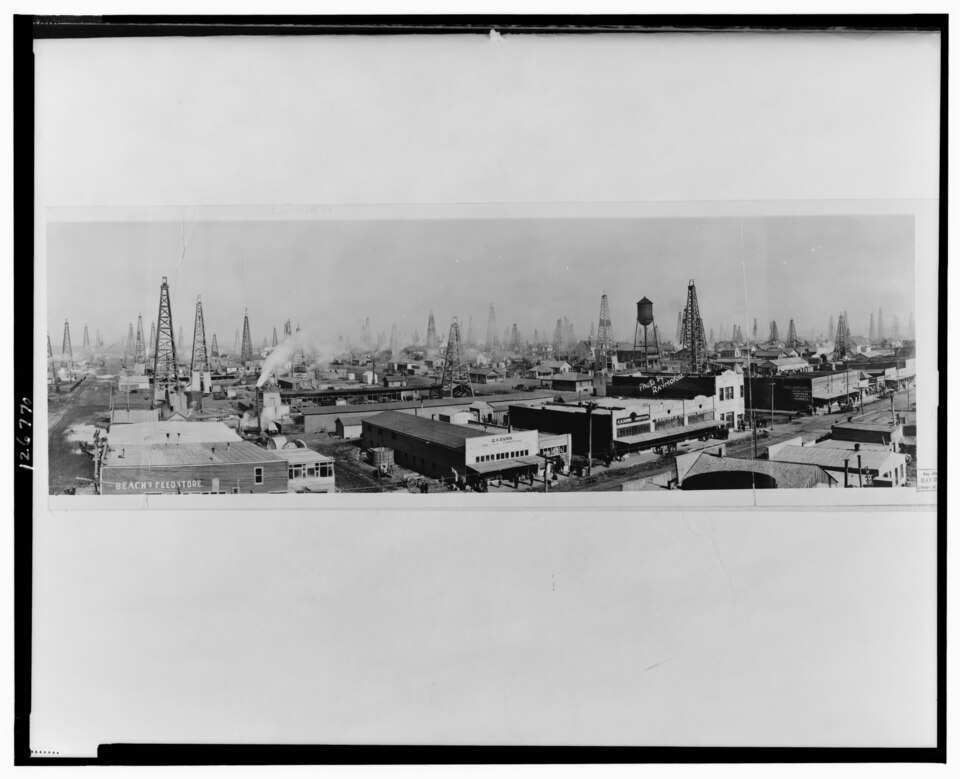
Montague County sits atop one of Texas’s oldest producing oil fields, and that history is not quite finished. The KMA Oilfield — named for founders Kemp, Munger, and Allen, straddling the Montague-Wichita-Archer county boundary — still yields crude from wells first drilled in the 1920s and 1930s. What was once a boomfield is now a mature stripper-well operation: quiet, distributed, and economically modest by state standards, but meaningful to the landowners collecting monthly royalty checks and to the county tax base.
What Montague County Produces Today
The Texas Railroad Commission’s Production Data Query for June 2024 shows Montague County Regular Field producing 91,170 barrels of crude oil, 2,689,847 mcf of natural gas, and 14,255 barrels of condensate in a single month. Annualized, that projects to roughly 1.09 million barrels of crude oil and condensate per year, plus approximately 32.3 billion cubic feet of natural gas.
Texas as a whole produces more than 500 million barrels annually. Montague County’s share is roughly 0.2% of state crude output — a small but real piece of a large industry.
Those numbers look different when measured against the county’s own history. In the 1940s, the KMA Oilfield’s peak production decade, the field was running at multiple thousand barrels per day across 3,000-plus wells. Today’s county-wide production of roughly 3,000 barrels per day equivalent represents less than 1% of peak rates. The decline curve has been running for eighty years, and there is nothing on the horizon to reverse it.
The KMA Oilfield: Legacy and Present
The KMA Field was discovered in two phases. The first, in October 1919, found shallow production. The deeper and larger discovery came on March 11, 1931, when the Deep Oil Development Company hit the Strawn formation at approximately 3,800 feet. Subsequent drilling reached the Ellenberger formation at 4,300 feet in 1942.
At its peak, the KMA Field covered approximately 135,000 acres across three counties and operated more than 3,000 wells. The boomtown of Kamay in Wichita County housed 700 residents and 21 businesses at peak activity.
Today the same acreage is still producing, but under fundamentally different economics. Most active KMA wells are stripper wells — producing fewer than 10 barrels of oil per day, the classification threshold for marginal operations. Stripper economics work when crude prices are above roughly $50 per barrel WTI, which 2024-2025 prices (ranging $70-$85) have generally supported. Operators maintain existing wells, run occasional workover campaigns to re-enter older zones, and selectively apply hydraulic fracturing to extend productive life from formations already developed decades ago.
The Barnett Shale horizontal drilling revolution that transformed neighboring Wise and Tarrant counties largely bypassed Montague County. The Barnett’s most productive core lies south and east; Montague County sits on the fringe where shale economics have not penciled out. The county remains a conventional, vertical-well producing region.
Smaller Fields and Wildcat Legacy
Beyond KMA, Montague County holds several smaller fields. The Nocona Field, discovered in 1919 and predating KMA’s main development, reached a peak of approximately 4 million barrels in 1927. The Clay County–Montague County boundary area (Worsham Ranch) saw limited oil discovery in the early 1930s. Scattered wildcat wells drilled across the county over several decades produced mostly dry holes; a few became modest stripper producers.
The full legacy of this drilling activity is documented in the county’s well records and in the RRC’s online databases. It also left behind an inventory of orphaned wells — operations whose operators have ceased to exist and whose plugging and abandonment obligations now fall to state remediation programs.
Employment and Economic Scale
Oil and gas directly employs an estimated 50 to 150 workers in Montague County, in a county with total covered employment of 8,220 persons (2024 BLS QCEW). That translates to roughly 0.6 to 1.8 percent of the employment base — a minor sector by headcount.
The jobs that exist are distributed and unglamorous: field hands maintaining pump jacks, workover crews brought in for re-entry campaigns (typically seasonal, weeks-long, then gone), truck drivers hauling produced water and equipment, and a small number of land agents and title attorneys handling mineral rights administration. Most positions pay in the $40,000-$65,000 range.
Oil and gas is not the economic engine of Montague County. Healthcare (1,021 workers), retail trade (936 workers), and manufacturing (832 workers) all employ more people. Agriculture, much of it self-employed, employs more still when self-employed ranchers are counted.
What Oil and Gas Means to Landowners
The sector’s more significant economic role is played out in royalty checks, not payroll. Montague County landowners with productive mineral interests — estimated at 200 to 500 families — receive monthly royalty payments from operators leasing their land. At typical royalty fractions (1/8 to 1/6 of gross revenue) and current production volumes, the aggregate annual royalty inflow to county families likely falls in the $500,000 to $2 million range, based on June 2024 production rates and $50-$70 per barrel crude pricing.
Per-well royalties at stripper volumes are modest — often $50 to $500 per month per well — but they arrive reliably, require no labor from the landowner, and supplement ranch income in a county where agricultural commodity prices fluctuate sharply.
The mineral rights question is also material for newcomers buying ranchette properties. Many Montague County tracts have severed mineral rights, meaning a prior owner retained subsurface ownership when the surface was sold. Ranchette buyers who don’t verify mineral ownership may be surprised to find that drilling could legally occur on their property, or that they will not receive royalty income from any future production. Local title companies and the Texas Railroad Commission’s records are the appropriate resources for this due diligence.
Tax Revenue Contribution
Texas levies severance tax on oil and gas extraction, with a portion distributed to producing counties. The county also collects property tax on oil and gas equipment through the Montague County Appraisal District. Combined annual revenue from all sources — production taxes, property taxes on equipment, and severance pass-throughs — is estimated at $100,000 to $300,000 annually, based on production volumes and typical formula distributions. Specific figures require direct Texas Comptroller query and are not catalogued in the county’s current public records.
Regulatory oversight comes from the Texas Railroad Commission (well permitting, production reporting, plug-and-abandon compliance) and the Texas Commission on Environmental Quality (air quality, waste disposal). Groundwater protection is managed through licensed disposal wells for produced saltwater; legacy contamination from 1940s-1980s practices represents an ongoing monitoring responsibility.
The Outlook
The production trajectory for Montague County is one of continued decline. Conventional mature fields follow predictable decline curves — typically 5 to 10 percent annual production reduction in the absence of new drilling. Workover campaigns extend well life but do not reverse overall decline. New horizontal drilling in the Barnett fringe remains economically marginal at current prices.
The factors sustaining the sector are structural rather than dynamic: landowner acceptance of oil operations on ranch properties (and the royalty income that comes with them), small operator adaptation to stripper economics, oil price stability in the $70-$85 range supporting continued maintenance-level operations, and geographic isolation that means oil operations on ranch properties face no competing land-use pressure.
The KMA Oilfield’s second century will look nothing like its first. It will be quieter, less visible, and economically smaller — but the pumpjacks will still turn, the royalty checks will still arrive, and the field that built Kamay will continue its long, slow, profitable decline.
Production data from Texas Railroad Commission Production Data Query, June 2024. Employment data from BLS QCEW 2024 annual. Royalty estimates based on production rates and standard lease terms; specific figures require operator-level data for precision.
Related guides: Real Estate and the Ranchette Boom · Workforce and Commuting Patterns
Related history: The KMA Oilfield · Wildcatters and Lost Wells