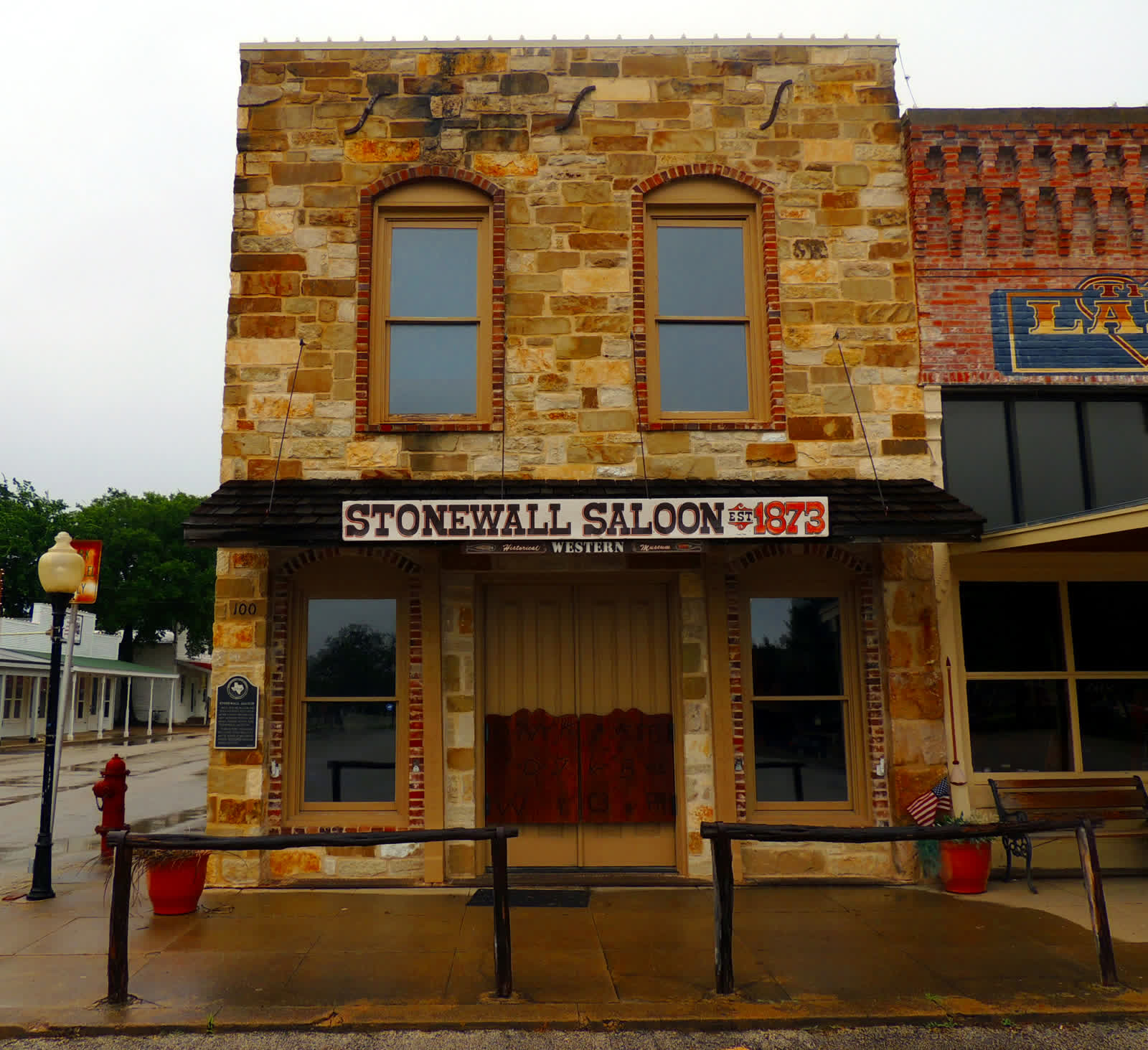
The building at 100 South Main Street in Saint Jo is the oldest surviving structure in the town and one of the most distinctively layered small-town heritage sites in North Texas. Built of native stone in 1873 as a saloon serving Chisholm Trail cattle drovers, it is the physical starting point for Saint Jo’s story — named after a Confederate general, built by the man who named the town after a teetotaler, and now a museum that holds the trail-era and founding-era artifacts of a community that has been reshaping its own identity since the beginning.
This page covers the building and museum as a physical place. For the ghost lore associated with the building and other Saint Jo sites, see the folklore page linked through the Saint Jo town hub.
The Building
The Stonewall Saloon was built in 1873 — the same year that Irby Holt Boggess and his business partner Joseph A. Howell surveyed and platted the townsite of Saint Jo. Boggess constructed the saloon as the first permanent structure in the new town, choosing native stone at a moment when most of the surrounding structures were log cabins. The stone construction was a statement of permanence and capital; it is why the building is still standing 150 years later.
The building was named after Confederate General Thomas “Stonewall” Jackson, reflecting the Tennessee-origin political sympathies of the town’s founders. The Texas Historical Commission historical marker erected in 1967 (HMdb m=212485) records the official designation: the Stonewall Saloon, built 1873, first permanent building in Saint Jo, Montague County, Texas.
The founding irony is one of the better ones in North Texas civic history. The building was constructed by Irby Boggess, who named the town “Saint Jo” after his business partner Joseph Howell — a man notably opposed to the sale of alcoholic beverages. The town’s first permanent structure was a saloon. Howell’s abstemiousness, embedded in the town’s name as an affectionate joke, eventually won: Saint Jo remained a dry town for eighty years after national Prohibition ended, finally reversing course with a May 2009 vote.
The Saloon Years (1873–1899)
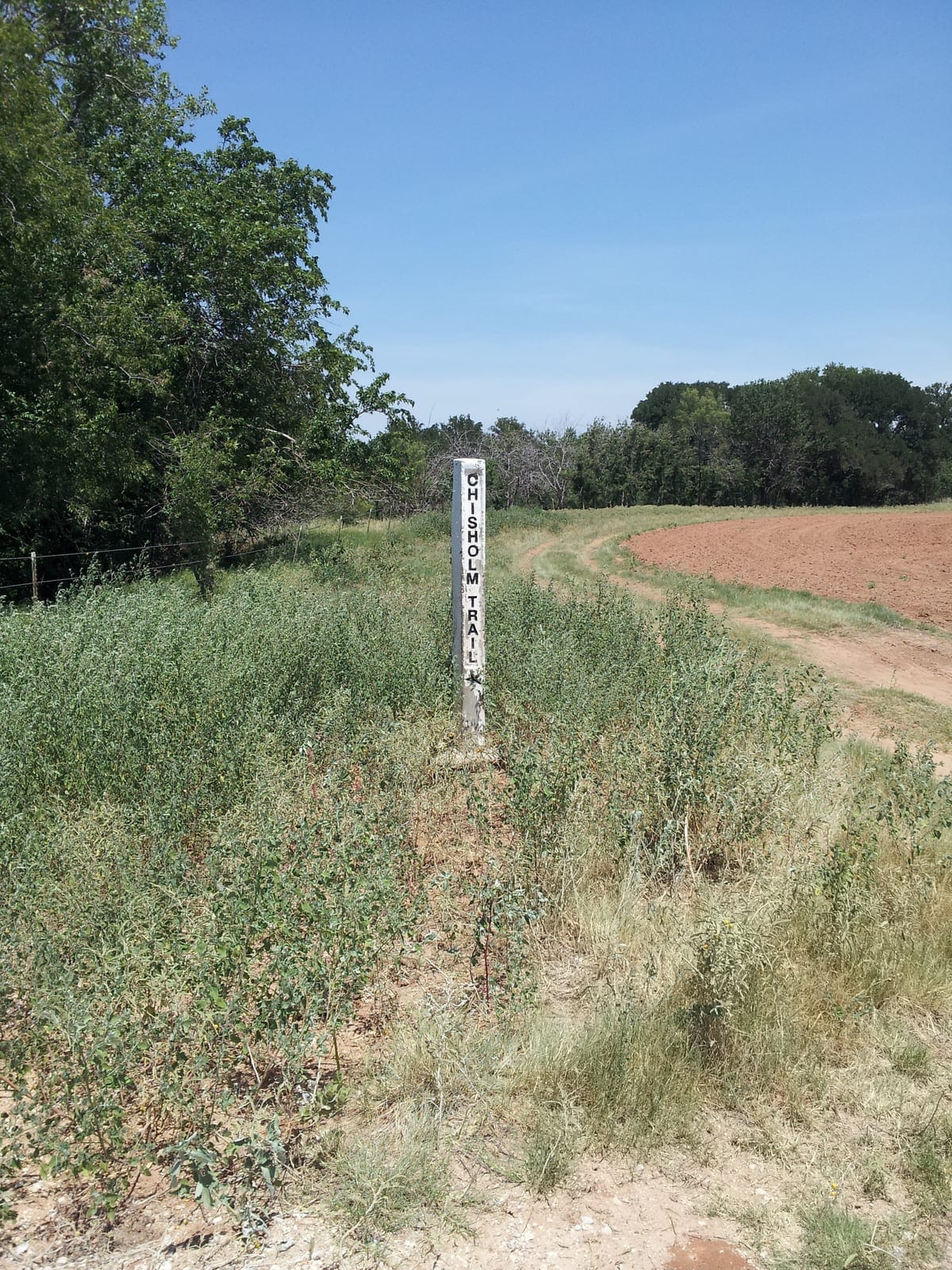
The Chisholm Trail made the Stonewall Saloon economically essential. Saint Jo sat at the last significant supply point in Texas before trail crews crossed the Red River at Red River Station, fifteen miles to the north. The drovers who funneled through town needed water, provisions, and the chance to spend a few hours under a solid roof before the river crossing.
The drovers were a mixed workforce. Anglo Texans, Black cowboys who constituted roughly a quarter of the trail labor force, and the vaquero workers from south Texas whose horsemanship had assembled the herds in the brush country before the drives began all passed through Saint Jo on the way north. The Stonewall Saloon served the crossing trade through the peak of the cattle era — the late 1870s and early 1880s, when trail herds arrived in seasonal waves and Saint Jo’s population briefly approached 1,000.
Trail commerce did not last. The Chisholm Trail’s commercial lifespan effectively ended by 1884, as Kansas quarantine laws restricted the driving routes and advancing railheads made the long drive north redundant. Without the drovers, without the seasonal commerce, the trail-economy businesses in Saint Jo began to close. The Stonewall Saloon closed on February 11, 1899, marking the end of the drover era in brick and mortar terms.
For more on the Chisholm Trail’s role in Montague County, see Chisholm Trail.
Transformation (1899–1958)
After the saloon closed, the building moved through a succession of uses that tracked Saint Jo’s transition from cattle-trail boom town to agricultural county seat. A restaurant occupied the building in 1902. By 1905 it had become Citizens National Bank — the frontier saloon converted into the agricultural bank, the liquid economy of the cattle drive replaced by the paper economy of farmland mortgages. The bank’s 1908 vault is still visible inside the current museum, a physical artifact of that second career.
In 2008, a group of local residents purchased the museum. In 2011, the organization became a 501(c)(3) nonprofit, establishing the institutional framework that continues to support the museum’s operations.
The Museum
The Stonewall Saloon Museum reopened the building as a heritage museum in 1958. The conversion preserved the building’s physical character while repurposing it as an interpretive and community space. Volunteer-staffed and community-supported, the museum has operated continuously since that reopening.
The exhibits interpret Saint Jo’s history through artifacts, photographs, and documents organized around several themes:
The founding narrative — The Singletary brothers’ 1849 gold-prospecting arrival at the Head of Elm springs, Boggess and Howell’s 1872–1873 townsite survey and naming story, and the early settlement record.
Saloon-era artifacts — Bar and bar fittings, drover-era equipment (hats, bridles, tools), photographs of trail-era Saint Jo, and the physical materials of a Chisholm Trail crossing business.
Chisholm Trail history — The trail’s route through Montague County, Saint Jo’s role as the last major supply point before the Red River crossing, and the drover experience.
Saint Jo town heritage — Multi-generational Montague County families, the town’s growth and contraction, and the photographic record of Saint Jo through its various eras.
The museum also holds some Indigenous heritage material and pre-Anglo context exhibits. Current exhibit inventory, visitor hours, and admission are best confirmed directly through the museum (stonewallsaloonmuseum.com).
Saint Jo Trade Days Connection
The museum shares the historic downtown square with Saint Jo Trade Days, a recurring market event drawing antique dealers, craft vendors, and visitors from across north Texas. The synergy between the Trade Days traffic and the museum anchors Saint Jo’s heritage destination identity and sustains the volunteer base that the nonprofit depends on.
The Building as Physical Artifact
The Stonewall Saloon building is the most important physical artifact of Saint Jo’s history because it is the only piece of the original 1873 townsite still standing in recognizable form. The stone construction that made it the town’s first permanent building also made it durable enough to outlast the succession of purposes it was put to.
The building’s native stone construction, its position at 100 South Main facing the historic square, and the 1908 bank vault visible inside make it a layered physical record: saloon, bank, museum. The square it faces is the same ground that Howell surveyed in 1873. The landscape logic that brought the Singletary brothers to the Head of Elm springs in 1849 — reliable water, timber edge, a defensible position on the divide — is still readable in the topography around the building.
For the full Saint Jo town history, including the founding narrative, railroad bypass, and 20th-century dry-town politics, see the Saint Jo town hub.