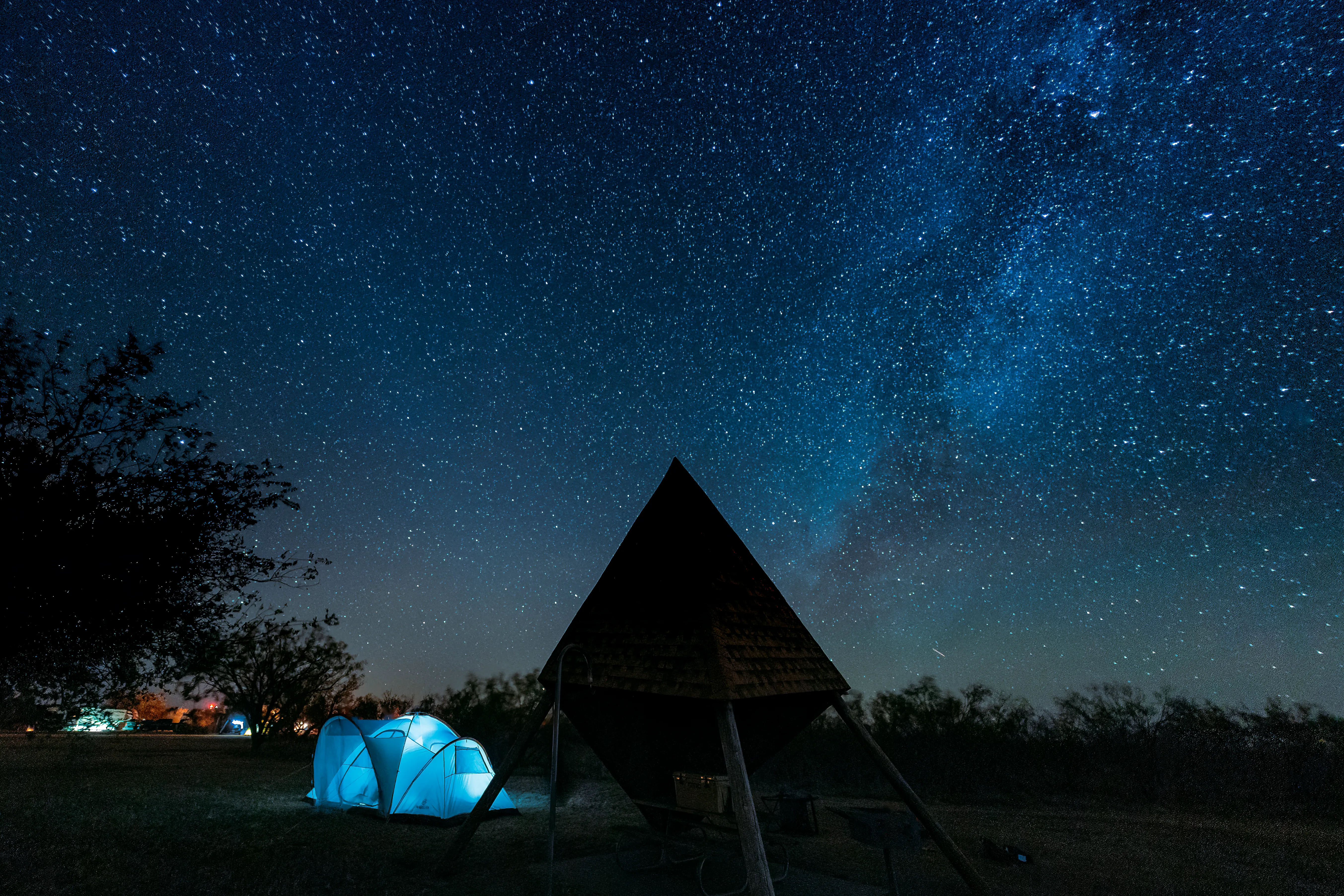
On a clear moonless night in rural Montague County, the Milky Way is visible. Not dramatically, the way it appears from Big Bend or the Trans-Pecos, but visible — a faint bright band arching through Sagittarius in summer and Orion in winter, clear enough to see with the naked eye from a field or ranch road away from town. That is more than most of the DFW Metroplex can say.
MoCo’s dark skies are a secondary asset, not a primary attraction. But for residents who step outside on summer nights, for the visitor wanting a quiet astronomy session, and for a county thinking about what draws the next generation of rural-curious tourists, the night sky is genuinely worth knowing about.
The Light Pollution Picture
The DFW Metroplex is one of the largest urban light-pollution sources in the United States. Its light dome extends 100 or more miles in clear conditions; on any clear night in MoCo, the southern horizon glows from Dallas and Fort Worth. The Wichita Falls light dome brightens the western horizon. Bowie, Nocona, and Saint Jo each add small local glows. The net effect: MoCo’s rural areas sit in a zone of compromised-but-usable darkness.
The standard framework for measuring sky darkness is the Bortle scale (1–9, darker to brighter):
- Most rural MoCo falls in the Bortle 4 range: rural-suburban transition. The Milky Way is clearly visible on moonless nights; faint deep-sky objects are difficult; the DFW glow is consistently present on the southern horizon.
- The darkest patches — the Red River bottoms in the northwestern county, away from all towns — approach Bortle 3 (rural): the Milky Way shows clear structure and casts a faint shadow; many more deep-sky objects become achievable.
- Truly dark skies (Bortle 1–2) are not present in MoCo or anywhere near it. The nearest Bortle 1–2 skies are in the Trans-Pecos.
Light pollution in north Texas has been increasing steadily. DFW’s northwest growth into Denton and Wise counties has brought the urban fringe closer to MoCo over the past two decades. LED lighting adoption — energy-efficient but often poorly shielded and heavy in blue-spectrum output that scatters more in the atmosphere — has in some areas worsened night skies even as individual fixtures use less energy. The trend is toward darker skies becoming harder to find.
Designated Dark Sky Places Near MoCo
DarkSky International (formerly the International Dark-Sky Association) designates official dark-sky parks and communities. In Texas:
- Copper Breaks State Park (Hardeman County) — the closest IDA-designated dark sky place to MoCo, roughly 100 miles to the west. Gold-tier designation; actively promoted for astronomy.
- Caprock Canyons State Park (Briscoe County) — designated 2025; further west.
- Big Bend National Park, Big Bend Ranch State Park, Devils River State Natural Area, Enchanted Rock State Natural Area, South Llano River State Park — all designated, all in West or Central Texas.
Montague County has no IDA designation and would not currently qualify (Bortle 4 typical) without significant local light-pollution reduction. A community commitment to shielded outdoor lighting and reduced over-illumination could theoretically improve MoCo’s sky quality over time, but no current program exists.
What Is Visible from Rural MoCo
Even with light-pollution compromise, the sky over rural MoCo is productive:
Naked-eye targets:
- The Milky Way — summer galactic core (June–September) and winter band (December–March)
- All five classical planets (Mercury, Venus, Mars, Jupiter, Saturn) when positioned favorably
- Bright stars, constellations, and asterisms unaffected by moderate light pollution
- Meteor showers: Perseids (August), Geminids (December), Leonids (November), Quadrantids (January)
- ISS passes and Starlink trains (predictable via online trackers)
- Aurora during major geomagnetic storms — rare but possible, particularly for extreme events
Telescope targets:
- Planetary detail: Saturn’s rings, Jupiter’s cloud bands and moons, Mars surface features in opposition, lunar terrain
- Star clusters: Pleiades (M45), Beehive Cluster (M44), and others bright enough to overcome moderate light pollution
- Brighter nebulae: Orion Nebula (M42) is accessible even from suburban skies
- Galaxies: Andromeda (M31) is naked-eye in dark conditions; the Virgo galaxy cluster and Leo galaxy pairs are challenging but achievable from Bortle 4 with a moderate telescope
- Double stars and variable stars: unaffected by light pollution
Compromised targets:
- Very faint deep-sky objects, zodiacal light, and the faint outer Milky Way structure are significantly degraded by DFW light dome.
Seasonal Observing
Summer: The galactic core of the Milky Way rises high in the south; Cygnus and Scorpius are prominent. Jupiter and Saturn often visible in evening sky. The Perseids peak around August 12.
Fall: Andromeda Galaxy and Pegasus in the southern sky; fading summer Milky Way; October minor tornado risk means checking weather before committing to an observing night.
Winter: Orion and the winter Milky Way dominate; best atmospheric transparency due to lower humidity. The Geminids (December 12–14) are the year’s most reliable meteor shower.
Spring: Galaxy season — Virgo Cluster and Leo Triplet are the spring galaxy targets, challenging from Bortle 4 but viable with a 6” or larger telescope on a stable night. The 2011 and 2024–2025 droughts both produced unusually transparent spring skies (drought = low humidity = better seeing).
Practical Tips for Observing in MoCo
- Head north in the county (away from Bowie and Nocona) and seek out locations away from FM road lighting. Open ranch country with clear southern and eastern horizons is ideal.
- Plan observing sessions for new moon ± 3 days, as moonlight washes out faint objects significantly.
- Spend 20–30 minutes away from white light before peak dark adaptation. Bring a red flashlight to preserve night vision.
- Choose winter nights for the lowest humidity and best transparency, or summer for better Milky Way core position (accepting higher atmospheric moisture).
- Check the Clear Outside app or Astroplanner for local transparency and seeing forecasts before committing to a night.
Why Dark Skies Matter Beyond Stargazing
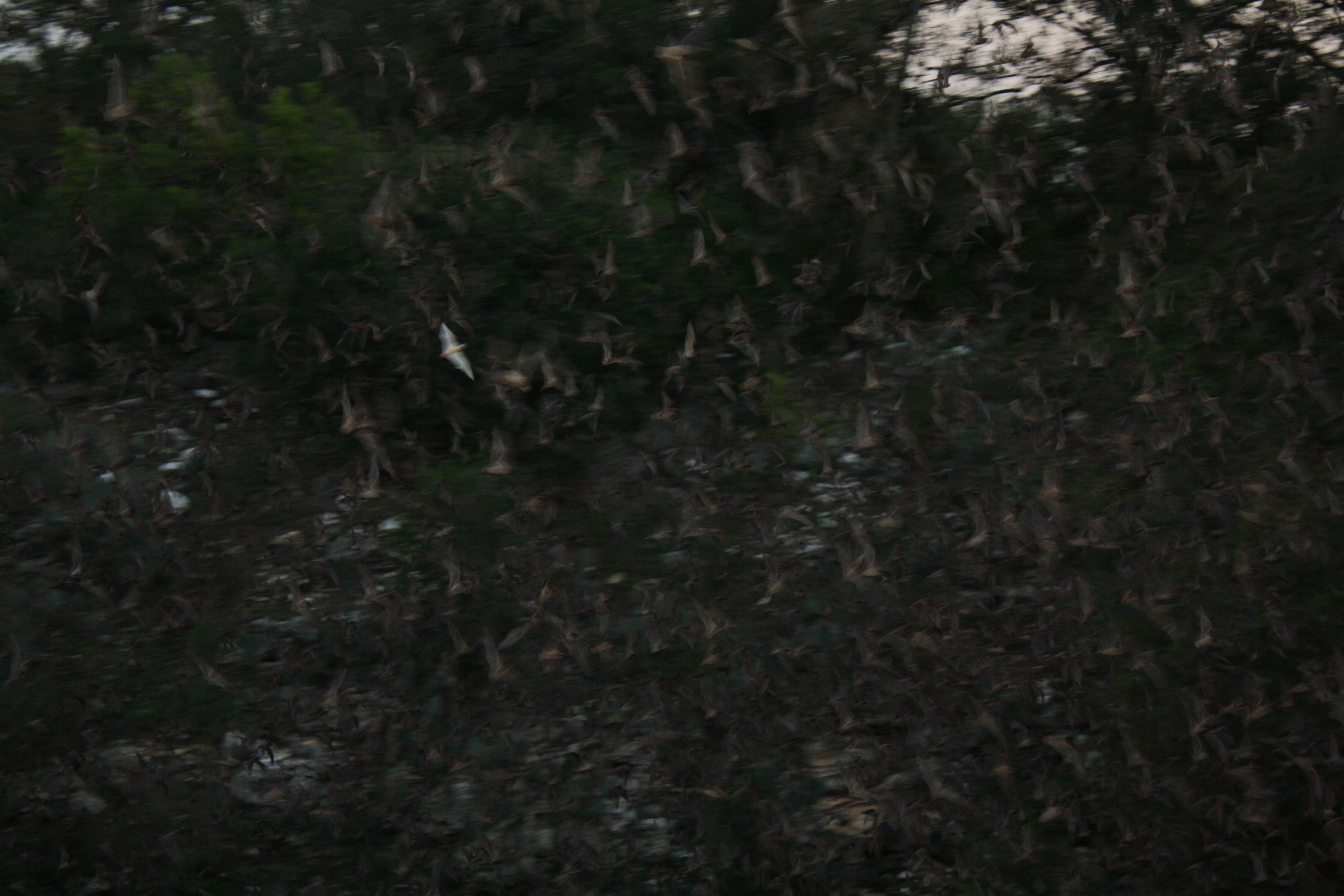
Light pollution has consequences beyond the aesthetic. Artificial light at night disrupts nocturnal wildlife — insects, bats, owls, and migrating birds are all affected by light that alters their behavioral cues. Insect populations drawn to lights are removed from their ecological roles; bat foraging patterns shift around artificial light sources. Human health effects (circadian disruption, sleep disorders) are increasingly documented. And the cultural and historical meaning of a visible night sky — navigation, myth, the grounding sense of being small in something vast — is a quiet loss when it disappears.
Related nature topics: Climate and Weather | Bats and Caves