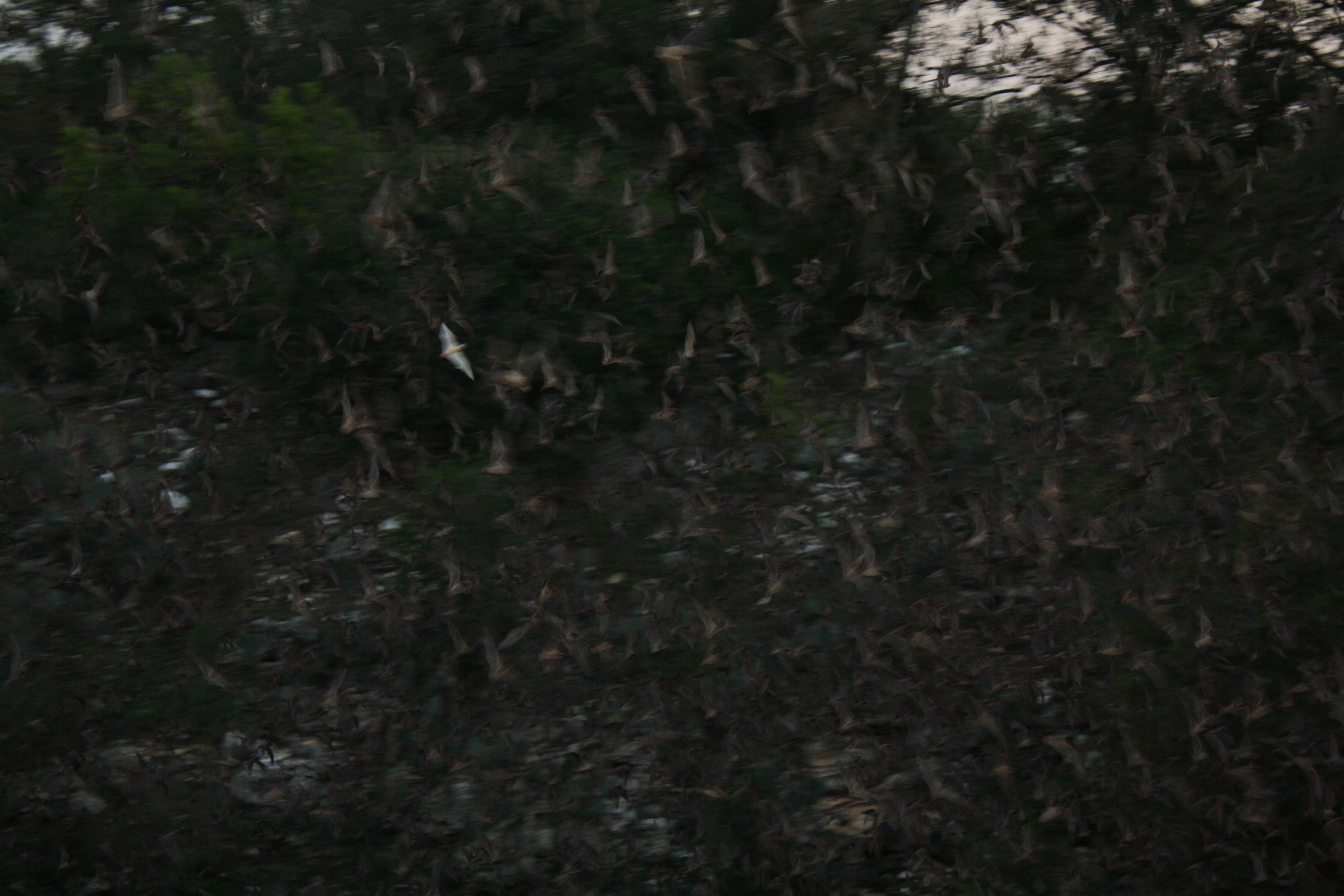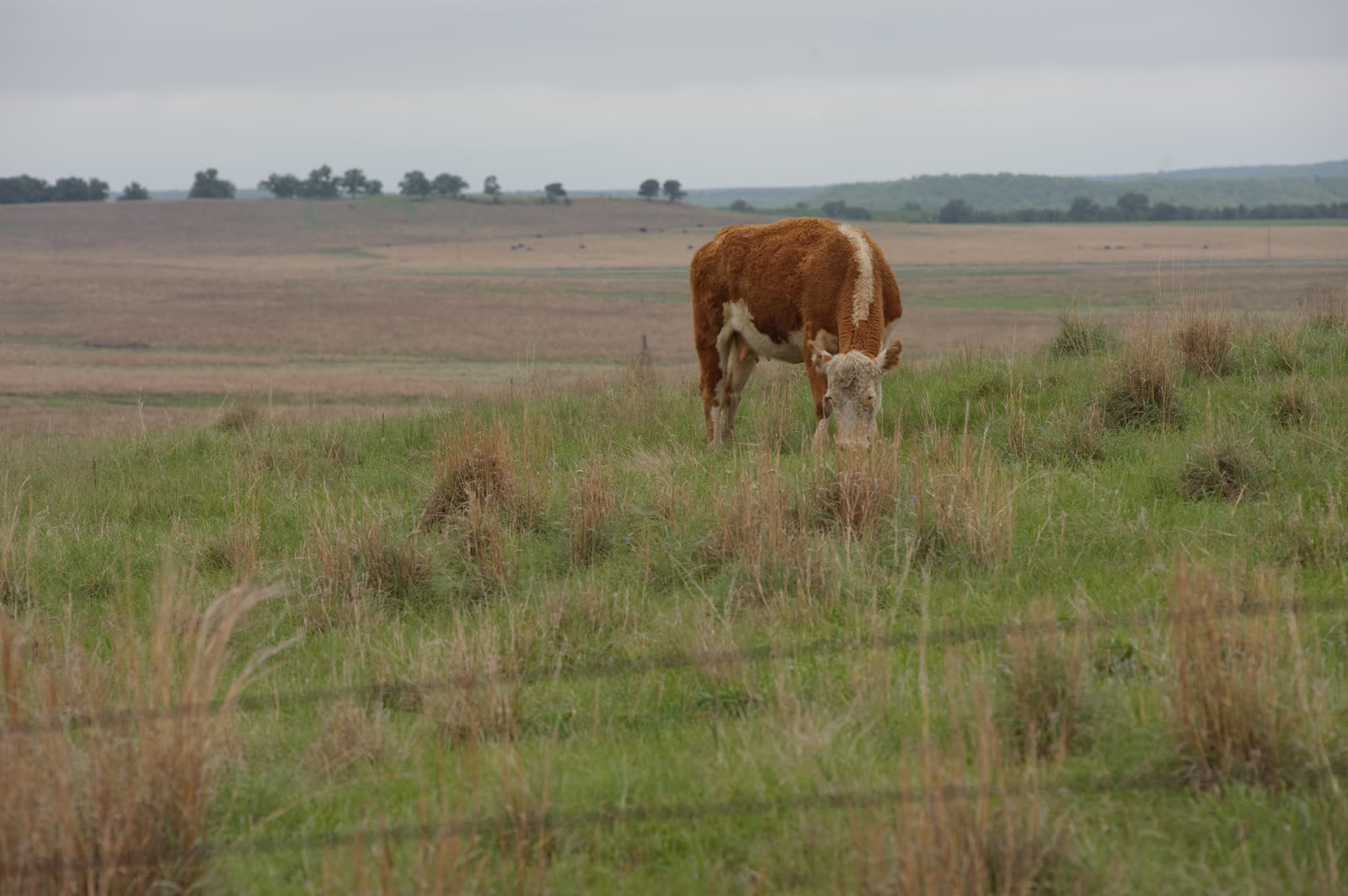
The coyotes that howl at dusk across rural Montague County are the loudest evidence of the ecological story the county has lived since 1900. Before that, wolves were at the top of the local food chain — the apex canid that shaped coyote behavior, kept coyote populations suppressed, and held a predator guild in balance. The wolves are gone. So are the mountain lions, black bears, bison, elk, and pronghorn that defined the pre-frontier mammal community of north-central Texas. What replaced them is a smaller, more resilient system — dominated by deer, coyote, and brush-cover species — that functions well enough but operates at a different scale than what came before.
White-Tailed Deer: The Species Hunters Care About
The white-tailed deer (Odocoileus virginianus) is the foundation of MoCo’s substantial hunting-lease economy and the most visible large mammal in the county. The Cross Timbers is excellent whitetail habitat: broken cover, mast crops (acorns, pecans), browse, creek water, and adequate escape structure all available within a compressed landscape. Population densities in well-managed Cross Timbers habitat typically run 30 to 60 deer per square mile.
The MoCo whitetail rut peaks in mid-November — the same timing that drives the bulk of the county’s deer-hunting economic activity. The shift over the past 30 years has been toward managed-lease hunting on larger properties with feeders, food plots, and trophy protocols. Managed ranches produce mature bucks; heavily hunted properties with high access and no management produce young deer. The distinction matters to lease economics and to the animals.
The county is not in TPWD’s chronic wasting disease (CWD) surveillance zone as of 2026, though CWD has been detected in adjacent regions. Hunters should verify current TPWD zone maps each season as the disease’s spread is actively monitored.
Mule deer begin west of MoCo; occasional individuals may appear at the western county edge but are not established. Pronghorn were functionally extirpated from the county’s western prairie sections by 1900 and now occupy range well to the west.
Carnivores
Coyote: The Dominant Predator
The coyote (Canis latrans) is the ecological anchor of MoCo’s modern predator community. It is present countywide, in every habitat, at every season, and in higher numbers than at any point in the county’s pre-Anglo history. This counterintuitive abundance is the direct result of wolf removal: gray wolves and red wolves were coyote suppressors — competitors at the apex that kept coyote numbers constrained. Their absence opened an ecological vacancy that coyotes have filled completely.
Modern MoCo coyotes are generalists. Their diet runs from cotton rats and cottontail rabbits (the primary prey base) through carrion, fruit, and pecans, to the livestock and poultry losses that drive rancher conflict. Newborn calves, lambs, and kids are vulnerable; healthy adult cattle are not regular coyote targets. The pastoral management response — guard dogs (Great Pyrenees, Anatolian Shepherd), donkeys, llamas — is widespread in MoCo sheep and goat operations.
The coyote chorus at dusk is one of the defining sounds of rural Montague County. Many residents find it simply part of the landscape; others find it directly connected to livestock bills. Both reactions are valid responses to the same animal doing exactly what it has always done.
Bobcat
The bobcat (Lynx rufus) is present countywide and largely invisible. Solitary, primarily nocturnal, and genuinely secretive, bobcats move through the county’s brushy Cross Timbers habitat without being seen by most people. Adults weigh 15 to 30 pounds. They hunt cottontail rabbits, rodents, and ground-nesting birds; they occasionally take small livestock but far less commonly than coyotes.
Bobcat populations in MoCo are stable. Trapping season runs roughly November through February; bobcat pelts retain residual fur-trade value that varies with the market.
Gray Fox and Red Fox
The gray fox (Urocyon cinereoargenteus) is native to the Cross Timbers and one of only two canids in the world capable of climbing trees — it can ascend post oaks and shin-oak clumps to escape pursuit or reach prey. Smaller than red fox, with a grizzled gray coat and black-tipped tail, it’s common in brushy and wooded country throughout the county.
The red fox (Vulpes vulpes) is likely non-native in much of north Texas — most red fox populations in the region descend from English foxhunting introductions in the 19th century. Whether MoCo’s red foxes are descendants of those introductions or of naturally expanded northern populations is murky. Both species are present; gray fox is more common in heavy brush, red fox in more open ground.
Fox-running with hounds — the north Texas night-hunting tradition where hunters followed dogs running fox by sound rather than shooting them — was a Cross Timbers activity that declined through the 20th century. Remnant practitioners remain.
Raccoon and Opossum
The raccoon (Procyon lotor) is the other ubiquitous predator of MoCo creek bottoms, pecan groves, and farm perimeters. It is an omnivore as comfortable at a stock tank as in a crop field, and its population density along watercourses is high. Commercial and native pecan operations lose meaningful crop to raccoons. Raccoons are the primary nest predator for ground-nesting game birds (quail, turkey, dove), making them a management concern for anyone trying to hold or build bird populations.
The opossum (Didelphis virginiana) — North America’s only marsupial — is slow, wide-ranging, and genuinely useful: it consumes ticks in numbers that have scientific support, and it rarely kills prey larger than rodents or bird eggs. Rural Texans tolerate opossums with a familiarity born of long coexistence.
Ringtail
The ringtail (Bassariscus astutus) is the county’s most obscure native carnivore — cat-sized, with outsized eyes and a dramatically banded tail, it is a procyonid relative of the raccoon and an almost strictly nocturnal hunter of rocky and brushy habitat. Present in MoCo’s western and southern portions, it is far less often seen than encountered as a name in mammal lists.
Small Mammals
The eastern cottontail is present in any MoCo brush — the common rabbit of shrubby cover. The black-tailed jackrabbit (technically a hare) occupies the open prairie sections of the western county; its populations have declined with the loss of open grassland but it persists. The swamp rabbit is possible in Red River bottomland.
Fox squirrels are the large tree squirrels of the Cross Timbers and pecan bottoms — common, pecan-loving, and a long-standing small-game quarry. Beavers (Castor canadensis) are present along the Red River and major creeks; their population recovered substantially in the 20th century after fur-trade depletion, and their dam-building activity creates wetland habitat important to other species. River otters are recovering in the Red River system; sightings in MoCo are uncommon but documented.
The nine-banded armadillo — Texas’s official small-state mammal — occupies MoCo as it does every other Texas county, its population having expanded northward from Mexico through the 20th century. Its digging activity damages lawns and pastures; it is also a vector for the leprosy bacillus, though human risk through normal encounter is low. Its tendency to jump straight up when startled has made it a reliable highway fatality statistic across the state.
What Is Gone
The losses define the modern community as much as the presences do. Gray wolves and red wolves were extirpated from MoCo and the broader Cross Timbers by 1900; red wolves historically occupied this range and are now reduced to a recovery program in coastal North Carolina. Mountain lions exist as dispersing individuals in north Texas occasionally; there is no resident breeding population in MoCo. Black bears may be slowly recolonizing from Oklahoma, with rare dispersing individuals appearing in north Texas. Bison are entirely gone from the wild; the county’s native pecan groves along Red River bottomlands mark the habitat edge where bison once grazed before the 1870s hide-hunting collapse. Elk and pronghorn are both historically present and functionally absent.
The system that remains is a capable mid-scale predator-prey community — deer, coyote, bobcat, fox — but it is an ecological remnant that operates without the apex pressure that shaped the original assemblage. Coyote and bobcat do a version of what wolf and mountain lion did; they do not do the same thing at the same scale.
Hunting Culture and the Lease Economy
For most MoCo residents, the dominant relationship with native mammals is the hunting lease. White-tailed deer are the lease anchor. Feral hogs (non-native, see Feral Hogs in Montague County) add year-round hunting opportunity. Coyotes are hunted year-round with no restrictions by callers using electronic devices and thermal optics. Fox squirrel hunting — a small-game tradition now less common than in mid-20th century — persists on some properties.
The hunting lease economy connects MoCo’s private land base to a regional recreational market and generates meaningful income for landowners. The cultural significance is at least as great as the economic significance: hunting in MoCo is generational, familial, and embedded in how the county understands its relationship to its land.
Related pages: Feral Hogs in Montague County · Native Birds of Montague County · Hunting and Fishing in Montague County · Red River Ecology
Sources: Schmidly and Bradley, The Mammals of Texas (University of Texas Press); TPWD Mammal Species Accounts; USDA Wildlife Services. Species ecology and distribution are well-documented in these sources. Montague County-specific detail for some topics remains incomplete in published sources.