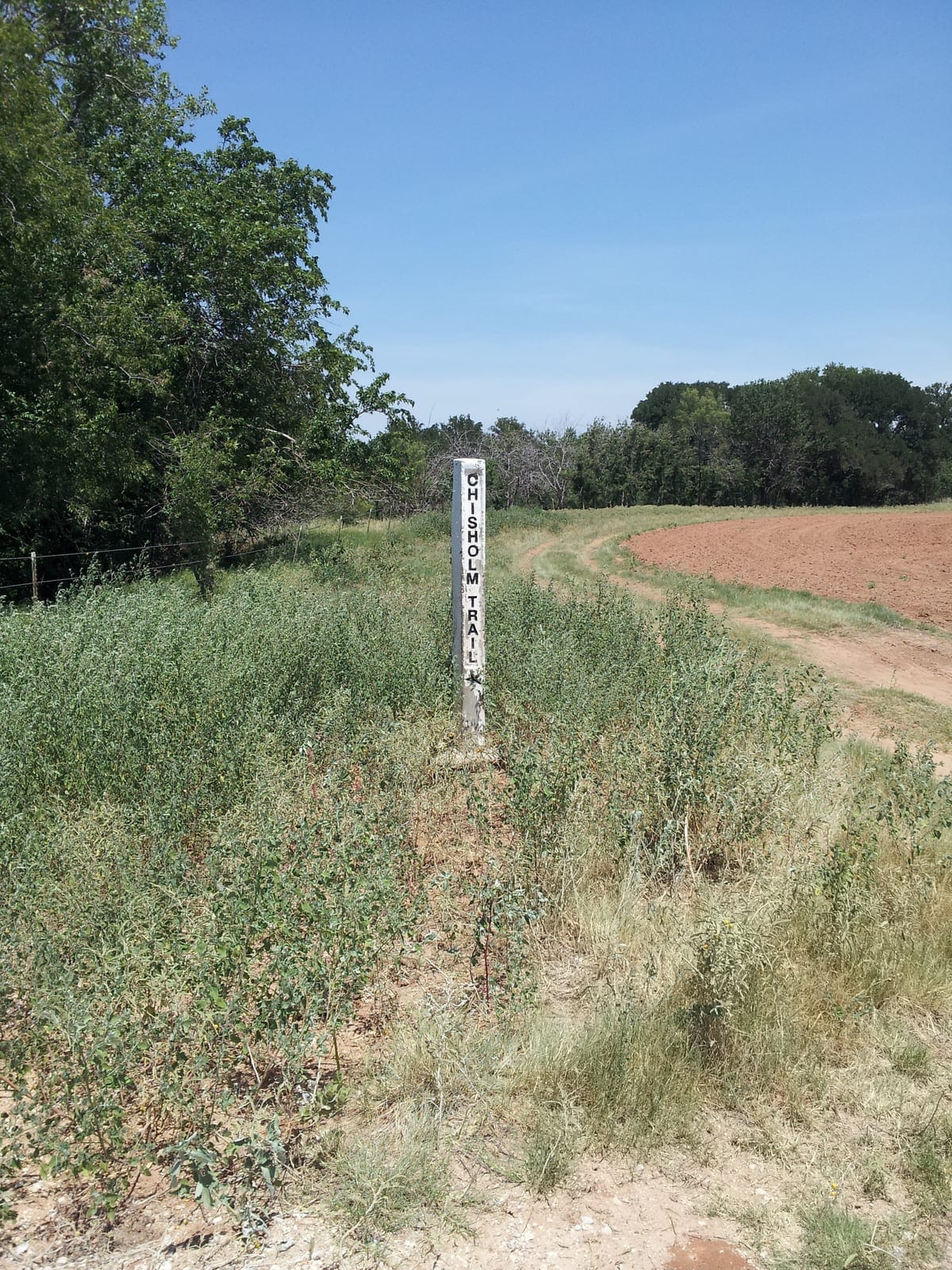
Red River Station occupies a particular place in Texas history that its current silence — a stretch of Red River bottomland in the northwestern corner of Montague County — does not readily communicate. For roughly fifteen years, from about 1867 through the early 1880s, this crossing was one of the most heavily traveled points on the entire Chisholm Trail, the primary ford where longhorn cattle herds crossed from Texas into Indian Territory on their way north to Kansas railheads.
The Chisholm Trail Crossing
The Chisholm Trail’s northbound routes converged on the Red River at several points in north Texas. Red River Station — sometimes called Red River Crossing or simply the Red River crossing — was the principal Montague County ford on the main trail. The crossing was in use from approximately 1867, when Jesse Chisholm’s trading route north from Texas through Indian Territory was formalized into the great cattle-drive corridor, through the early 1880s when the drives wound down.
By estimates drawn from Chisholm Trail scholarship, millions of longhorns crossed the Red River at this and nearby points during the trail’s active years. Drovers, cattle buyers, supply wagons, and the commercial infrastructure of the trail economy all moved through the station. At the crossing’s peak, the Red River ford was an intensely active place — a shallow, sandy-bottomed crossing that could turn treacherous during spring floods, requiring drovers to hold herds on the south bank for days waiting for water levels to drop.
The Texas Historical Commission recognizes Red River Station as a significant trail-era site. Its history connects directly to the broader account in Chisholm Trail.
The Civil War Station
Before the trail-drive era, the site was known as a Texas Frontier Regiment post — one of several stations established during the Civil War to patrol the Red River crossings against raids from Indian Territory. The regiment was chronically undermanned, and its inability to effectively watch all the Red River crossings was a factor in the devastating December 1863 Illinois Bend raid. The “Station” in the site’s name references this earlier military use.
Decline
The Chisholm Trail’s active life ended with a combination of forces: Kansas quarantine laws against Texas longhorns carrying tick fever, the spread of barbed wire across the open range, and the expansion of railroads into Texas that made the long trail drive to Kansas unnecessary. By 1884, the major drives had largely ended. Red River Station, which had existed as a commercial and military node in service of those drives, had no reason to persist as a community.
Today the site is unincorporated, accessible primarily as a historical landmark. The physical crossing on the Red River remains, though the trail traffic that made it famous is two centuries removed.
Related: Chisholm Trail | Spanish Fort | Illinois Bend