Sourcing Note: All cryptid and UFO accounts in this article are oral-tradition reports or unverified sighting claims. No physical evidence, official documentation, or investigative report corroborates any of the described encounters. The broader Texas paranormal context (Lubbock Lights 1951, Levelland 1957, Stephenville 2008; chupacabra 1990s origin) is documented in news archives and UFO literature; the MoCo-specific layer is entirely oral tradition, not yet verified through field research.
Confidence tier: Oral tradition only; limited corroboration
Why Rural Texas Generates These Stories
Montague County has fewer than twenty thousand residents distributed across 935 square miles of Cross Timbers brush, cedar breaks, river bottomlands, and open prairie. At night, particularly in the county’s western and northern sections away from Bowie’s light cluster, the sky runs dark. The Milky Way is visible. Aircraft and satellites are easily tracked. Unusual atmospheric events — ball lightning, lenticular clouds, optical refraction in humid or dusty air — are unobstructed.
This is not the reason unusual sightings are reported here. But it is the context in which they are reported. A rural county with sparse population, low light pollution, and substantial distances between neighbors creates conditions where unusual observations are made in isolation, carry across time in oral tradition rather than in news coverage, and accumulate without the institutional verification infrastructure that denser communities might apply.
The same conditions — sparse population, dark skies, remote terrain — characterize most Texas counties where cryptid and UFO traditions are documented. Montague County’s participation in these traditions is culturally unremarkable from a folklore standpoint. What is notable is the county’s specific landscape, which shapes the specific versions of the traditions that circulate here.
Bigfoot and Cryptid Reports
Bigfoot — or sasquatch — sighting reports are most densely documented in East Texas’s Piney Woods, where the dense pine forest and swampy bottomlands match the habitat assumptions the legend carries. The Cross Timbers brush country of Montague County is not the primary habitat in this tradition.
However, the Cross Timbers is dense cedar-oak-mesquite brush that can run thick enough to conceal large animals, and the county’s bottomlands along Denton Creek, Farmers Creek, and the Red River tributaries provide the water and cover that the legend-type associates with the creature. Bigfoot reports from the Cross Timbers corridor appear in regional paranormal databases, and the pattern of reports in neighboring counties suggests that MoCo likely has similar oral accounts circulating. Specific Montague County Bigfoot sightings have not been identified in a primary-source or documented interview format in available research.
Black panthers are a persistent Texas folk-claim worth addressing directly. “Black panthers” — as a distinct species or as a reliably documented color variant of any Texas-range cat — do not exist in the scientific record. What is documented: black melanistic jaguars and leopards exist, but neither has a Texas range. Black mountain lions (melanistic cougars) are extremely rare to nonexistent. Black bobcats are very rare. Large black domestic cats are occasionally mistaken for larger predators. [ANCHOR: Wildlife biology literature documented]
The black-panther tradition in Montague County, as throughout rural Texas, is real as oral tradition. Wildlife biologists report hearing the claim regularly. The claim cannot be dismissed as fabrication — people see something — but the zoological explanation is likely misidentification rather than a genuinely undocumented species. Whether MoCo has its own specific black-panther sighting tradition is an outstanding research question.
The chupacabra emerged as a distinct legend type in Mexico in the 1990s and spread to Texas through the 2000s, when several “chupacabra carcasses” found in rural Texas turned out under veterinary examination to be coyotes or feral dogs with severe mange — a condition that leaves the animal hairless and dramatically changes its appearance. The chupacabra tradition in MoCo, if it exists as a specific oral account rather than general awareness, has not been documented in available sources.
UFO Sightings
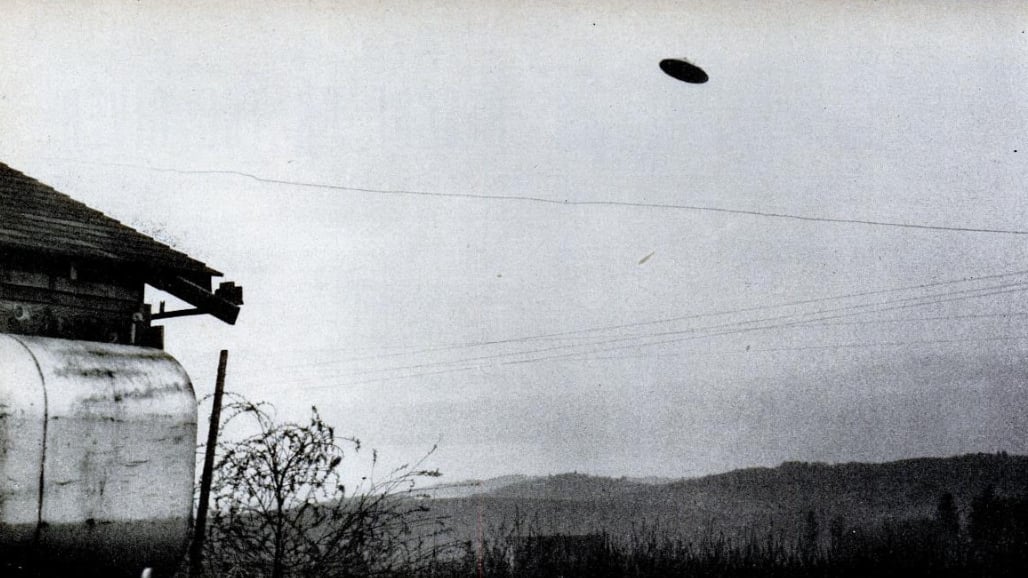
Texas has documented UFO incidents in the historical record. The Lubbock Lights of 1951 — a series of lights observed by Texas Tech professors and photographed by a local college student — became one of the foundational cases in the first-generation UFO literature. The Levelland case of 1957, involving a wave of separate witnesses reporting a luminous egg-shaped object that apparently stalled vehicle engines, was investigated by the Air Force’s Project Blue Book. The Stephenville sightings of 2008, about ninety miles south of Montague County, generated credible multi-witness reports and received national coverage.
The government’s evolving acknowledgment of UAP — Unidentified Aerial Phenomena — in the 2020s has shifted the public framing of UFO reports from fringe interest to a topic with official institutional attention.
No specific major Montague County UFO incident appears in the available regional sources, national UFO literature, or MUFON (Mutual UFO Network) database entries identified in the research review. The MUFON Texas chapter database may contain MoCo entries, and reviewing it remains an outstanding research question. The absence of a famous MoCo UFO case does not mean no cases have been reported — it means they haven’t entered the documentation tier where they become retrievable.
Generic rural Texas UFO reports — observers describing lights, craft shapes, or unusual aerial behavior on isolated county roads or from ranch settings — likely include some MoCo cases. Dark-sky conditions and the absence of air traffic control tower coverage for low-altitude flights make the county a plausible location for aerial phenomena that go unexplained.
Dark Skies as Context
The county’s dark-sky conditions are a documented fact, not folklore. The low light pollution in Montague County’s western sections — measurable by light-pollution maps produced for astronomical and conservation purposes — creates conditions where:
- Stars that are invisible in urban or suburban environments are easily seen
- Satellites and aircraft show up clearly against the dark background
- Atmospheric optical phenomena (halos, light pillars, noctilucent clouds) are visible when atmospheric conditions support them
- Ball lightning, a documented but rare electrical phenomenon, is more likely to be observed and reported in low-ambient-light conditions
This is the honest scientific frame for some of what generates unusual sighting reports in rural counties. A vehicle’s lights bouncing off fog can produce a following-light effect. Swamp gas, rare in north Texas but not absent, can produce luminescence. Temperature inversions can bend light in ways that make distant lights appear to move or hover.
None of this is a complete debunking of all unusual aerial observations. It is a calibrating context: the conditions in Montague County that generate credible unusual observations are also conditions where natural phenomena routinely produce appearances that resist immediate explanation.
What to Make of It
The culturally appropriate posture toward cryptid and UFO reports is neither automatic dismissal nor automatic acceptance. Folklorists treat these accounts as cultural data — genuine phenomena in the sense that people genuinely observe and report them, whatever their ultimate explanation.
The function of unusual-creature and unusual-aerial-phenomenon stories in rural communities is similar to the function of ghost stories: they provide a framework for experiences that resist ordinary categorization. A dark shape moving through cedar brush at dusk might be an unusual black animal or a shadow or a neighbor’s livestock. The mind that turns that sighting into a black-panther report is not malfunctioning — it is using available narrative categories to make sense of ambiguous sensory experience.
Montague County’s participation in Texas’s cryptid and UFO traditions is culturally unremarkable and locally genuine. The specific oral accounts circulating in the county have not been captured in an accessible archive. A structured oral history project would be the appropriate next step if documentation of MoCo’s specific participation in these traditions is the goal.
For more thoroughly documented oral traditions from Montague County, the Belcherville hauntings and Spanish Fort ghost town lore articles cover ghost-story traditions with more research depth. The Folklore hub indexes all oral-tradition entries.
Confidence Notes
This article carries low confidence throughout. The confidence rating reflects the research situation, not a judgment about whether unusual things happen in Montague County.
Documented anchors (not oral tradition):
- Dark-sky conditions in MoCo’s western sections (light-pollution mapping)
- Texas UFO cases: Lubbock Lights (1951), Levelland (1957), Stephenville (2008) — all documented in UFO literature and news archives
- Chupacabra 1990s origin and Texas spread documented
- Black panther zoological explanation documented in wildlife biology literature
Oral tradition only (no primary-source corroboration):
- All MoCo-specific cryptid sightings
- All MoCo-specific UFO reports
- Black-panther sighting accounts in MoCo
- Bigfoot/sasquatch reports in MoCo
- Cattle mutilation accounts in MoCo
A MUFON Texas database review for MoCo entries and oral history collection to identify specific local accounts remains an outstanding research question.
Sourcing Notes
No MoCo-specific primary sources were identified for any claim in this article. Broader Texas paranormal context draws from published UFO case files (Lubbock Lights, Levelland, Stephenville), wildlife biology literature on melanistic cats, and regional folklore documentation. All MoCo content is oral tradition only.