Sourcing Note: Paranormal claims about the Stonewall Saloon Museum are drawn from visitor accounts and haunted-tourism circuit reporting. No investigative, documentary, or primary historical evidence supports the supernatural elements of this account. The Stonewall Saloon Museum is a real, active heritage institution — the ghost lore surrounding it belongs to local oral tradition, not to the building’s documented record.
Confidence tier: Oral tradition only; limited corroboration
What Is the Stonewall Saloon Museum?
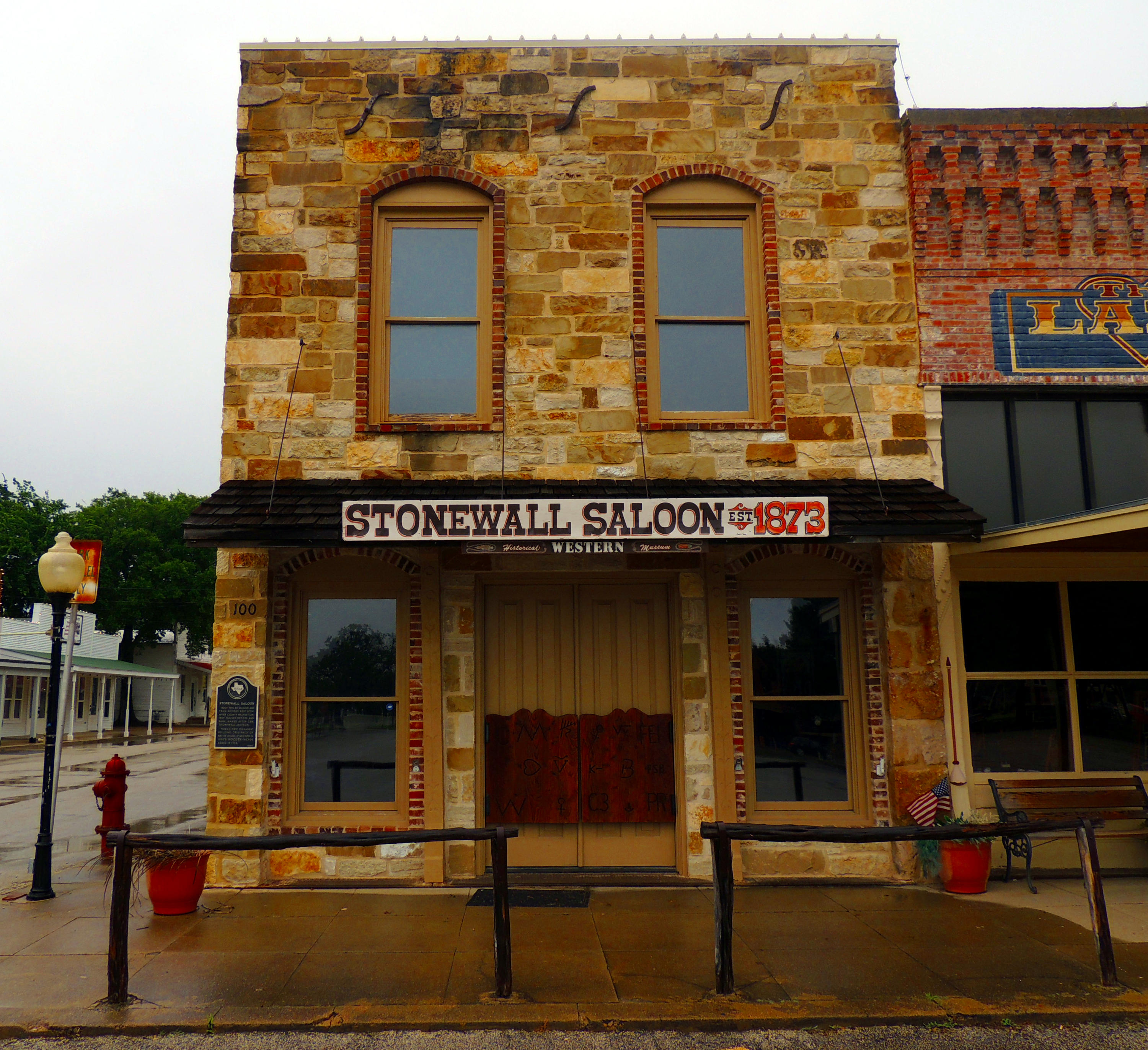
The Stonewall Saloon in Saint Jo is not a legend — it is the oldest standing structure in town. Built in 1873 from native stone, the building served as a saloon and trail-drivers’ rest stop during the Chisholm Trail era, when cattle drives and rough commerce defined Saint Jo’s character. The Historical Marker Database records it plainly: “The Stonewall Saloon was built in 1873 as a saloon and trail drivers’ rest stop in Saint Jo, Montague County, Texas. It was the town’s first permanent building, originally constructed of native stone.” The building was named after General “Stonewall” Jackson.
The saloon operated through the Chisholm Trail years, serving drovers moving cattle north through Montague County. Gambling, drinking, and the kind of violence common to trail-era Texas characterized the period — Saint Jo’s documented history notes various incidents, though which specific events occurred inside the Stonewall Saloon itself is a matter the research file marks as not yet verified from primary sources.
County prohibition in 1897 ended the saloon’s function as a drinking establishment. The building went on to house offices and a bank — the Citizens National Bank occupancy by 1905 is cited in the museum’s own records, though this specific date was not independently confirmed in the Historical Marker Database materials reviewed. The building was eventually refurbished and now operates as the Stonewall Saloon Museum, an active heritage institution in Saint Jo.
The museum’s documented history — 1873 stone construction, Chisholm Trail-era drover patronage, post-prohibition repurposing, and current museum operation — is well-attested. Its ghost stories are something else entirely.
What Ghost Stories Surround the Stonewall Saloon?
Local oral tradition has accumulated a range of paranormal claims around the Stonewall Saloon Museum over the years. These are the kinds of stories that attach to old buildings with violent or unusual histories, and they circulate through visitor accounts, regional paranormal databases, and haunted-Texas tourism reporting.
Reported phenomena — per oral tradition and paranormal investigation accounts, not documented historical record — include footsteps heard when no one is present, doors opening and closing without apparent cause, cold spots in specific areas, unexplained sounds during quiet hours, and electronic voice phenomena (EVP) reported by paranormal investigation groups. Specific apparition accounts describe a male figure near the bar area, a woman in period dress, and in some versions children’s voices. The sources for these descriptions are, per the research file, visitor oral tradition and paranormal circuit reporting rather than documented witness statements with named sources.
Adjacent Saint Jo sites figure in related lore. A historic log cabin in town carries reports of a strong perfume scent without discernible source and an apparition described as a hanged man — a narrative pattern the research file notes is common across old buildings nationally. Saint Jo’s cemetery has also generated paranormal reports of the kind typical of historic cemeteries throughout Texas.
The Spanish Fort ghost town lore in Montague County represents a parallel strand of county folklore, and Belcherville hauntings documents another oral-tradition entry in the MoCo collection. The Folklore hub provides a full index of oral-tradition entries.
Is the Saloon Part of the Haunted-Texas Circuit?
The research file notes the Stonewall Saloon Museum appears in haunted-tourism circuit reporting — the statewide network of travel content, paranormal investigation groups, and heritage-tourism operators routing visitors toward allegedly haunted locations. This means the ghost-story tradition has enough local traction to reach external audiences, and that paranormal investigation groups have visited the site.
Appearing on the haunted-Texas circuit is not independent verification of any specific claim. These networks often recirculate stories from other circuit participants rather than providing primary documentation. The museum’s engagement with ghost-story tradition — whether it formally incorporates haunted programming or simply benefits from the tourism interest — requires direct museum outreach to confirm.
Texas has many well-known paranormal destinations: Galveston, Jefferson, San Antonio among them. Saint Jo’s lore is modest by comparison but real — real in the sense that the stories exist and circulate, not in the sense that any supernatural claim has been verified.
Confidence Notes
The following breakdown distinguishes what the research file confirms from what it does not:
Well-attested (ANCHOR claims — promoted from primary sources):
- The Stonewall Saloon was built in 1873 as Saint Jo’s first permanent structure (HMdb Stonewall Saloon Historical Marker; TSHA Handbook of Texas — Saint Jo)
- The building was constructed of native stone and named after General Stonewall Jackson (HMdb marker text)
- The saloon served as a Chisholm Trail-era drover stop
- County prohibition in 1897 closed the saloon; the building subsequently housed offices and a bank
- The building currently operates as the Stonewall Saloon Museum
Deferred — requires verification:
- The “reopened 1958 as Stonewall Saloon Museum” date is cited by the museum website but was NOT independently confirmed in HMdb or TSHA sources. This date requires direct museum verification and is not asserted as confirmed in this article.
Oral tradition only; not subject to historical verification:
- All paranormal claims: footsteps, door movements, cold spots, apparitions, EVP readings
- Specific apparition descriptions (male figure at the bar, woman in period dress, children’s voices)
- The log cabin hanged-man apparition and perfume scent reports
- Cemetery paranormal phenomena in Saint Jo
- Any specific violent incident claimed to have occurred at the Stonewall Saloon without a named primary source
These claims originate in visitor oral tradition, paranormal investigation reports, and haunted-circuit reporting. They are not subject to the same evidentiary standard as documented historical claims. The cultural significance of the stories does not depend on their literal truth.
Why Do Ghost Stories Attach to Old Buildings?
The Stonewall Saloon’s trajectory from Chisholm Trail drover stop to haunted-Texas fixture reflects a pattern common in Texas heritage tourism. Old buildings with violent or unusual histories carry psychological weight. Communities preserve memory through narrative, including supernatural narrative. Tourism interest in ghost stories creates incentive for heritage sites to engage with the lore — whether formally or informally.
The Stonewall Saloon Museum’s documented history is genuinely interesting without any paranormal augmentation: the oldest building in a Chisholm Trail town, built from native stone in 1873, named for a Confederate general, operating through the cattle-drive era, repurposed after prohibition, and eventually becoming a heritage museum. That story stands on its own. The ghost lore is a cultural layer deposited over the documented record — worth presenting honestly, and worth distinguishing carefully from what the building’s actual history contains.
Sourcing Notes
Paranormal claims derive from visitor oral tradition and haunted-tourism circuit reporting (paranormal investigation networks, regional tourism databases). Historical anchors draw from the Historical Marker Database (HMdb) Stonewall Saloon marker and the TSHA Handbook of Texas entry on Saint Jo. No primary-source documentation supports any supernatural claim in this article.