Founder
Herman Joseph (H.J.) JustinA Boot Shop at the Chisholm Trail Crossing
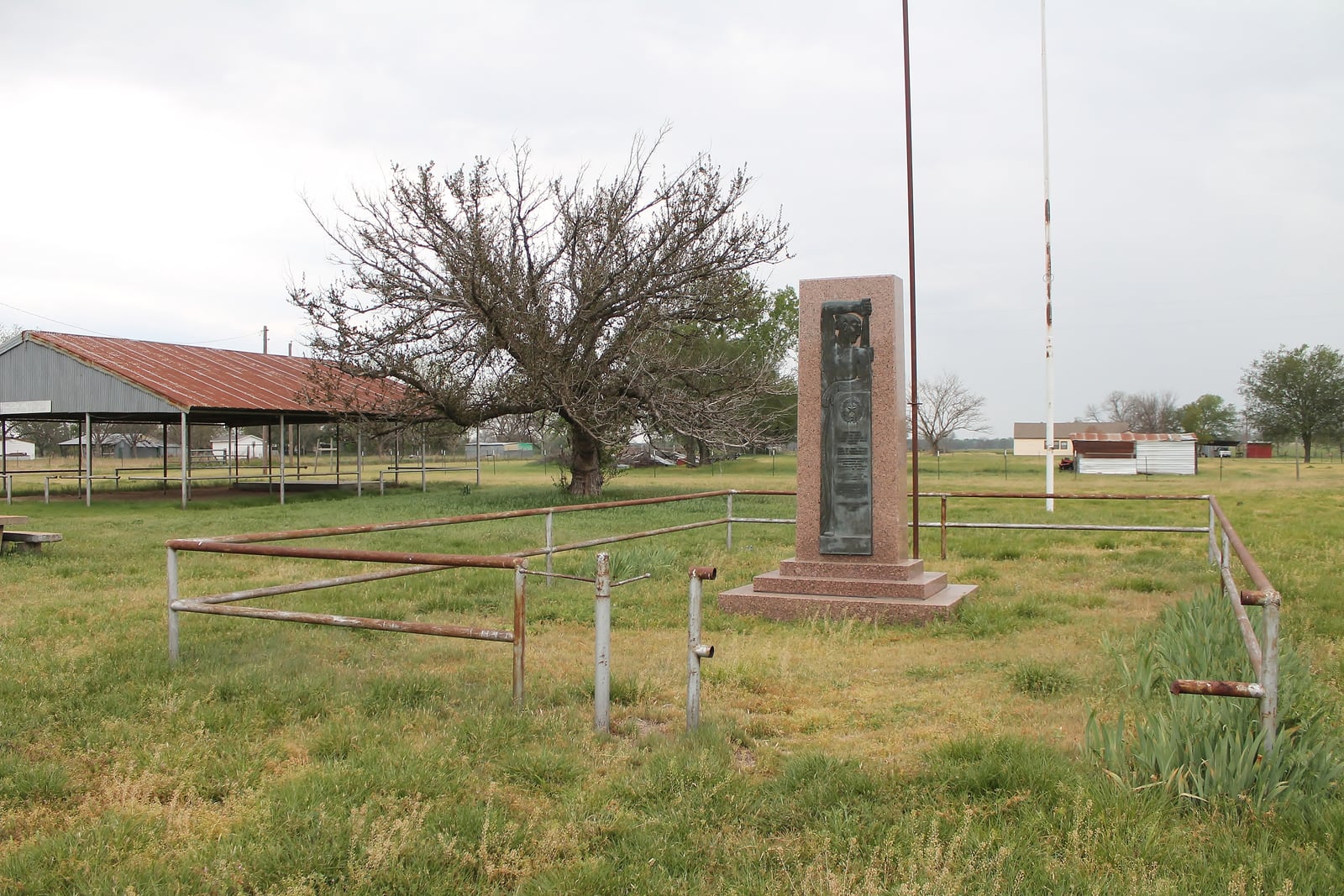
In 1879, a young Indiana-born man named Herman Joseph Justin — everyone called him Joe — arrived in Spanish Fort, Texas, with a cobbler’s skills and a keen sense of market timing. Spanish Fort in 1879 was not yet declining. It sat at one of the Chisholm Trail’s primary Red River crossings, and each spring and summer the road through town filled with cattle drovers pushing longhorns north to Kansas railheads. Those drovers needed quality boots. They could afford to pay. And the one thing they could not easily do from the back of a horse on a trail-drive was shop for replacements.
Joe Justin opened his own bootmaking shop that year, having spent a period apprenticing in the trade. His starting capital, according to the TSHA Handbook of Texas, was $35 borrowed from the town barber — a figure specific enough to have stuck in the institutional memory of a company that would eventually produce millions of boots.
The business model that emerged was not simply walk-in retail. Justin developed what was, for the era, a genuinely innovative distribution mechanism: a mail-order measurement system in which prospective customers traced their feet onto paper, mailed the templates to Spanish Fort, and received custom-fitted boots by return post. The system allowed Justin to build a customer base that extended far beyond the drovers who physically passed through town. By the late 1880s, Justin boots were known across Texas and into adjacent territories.
The Move to Nocona (1889)
By 1884, the Chisholm Trail’s major drives had largely ended, redirected by Kansas quarantine laws and the spread of barbed wire. Spanish Fort began its slow decline from trail-town to backwater. Justin had married Anna Sophia Allen in 1887 and was building a family business that needed infrastructure the fading town could no longer offer.
The solution arrived on schedule: Nocona, founded in 1887 on the Gainesville, Henrietta and Western Railroad (later GH&W), sat a comfortable distance from Spanish Fort with everything a mail-order bootmaker needed. Railroad connections meant parcels could move efficiently. The new town had the infrastructure of a going concern rather than the exhaustion of a spent one.
Justin moved his operation to Nocona in 1889. The family settled in. Children were born — among them Earl, John Sr., Avis, and, in 1894, Enid — and grew up in a household where bootmaking was the central fact of economic life. Justin taught his craft to his children. The mail-order business continued to expand. By the early 20th century, the firm traded as H.J. Justin & Sons, a designation that acknowledged what had become true: this was a family enterprise, not merely a solo cobbler shop.
Growth and the Justin Name
Through the 1890s, 1900s, and 1910s, Justin’s operation in Nocona expanded steadily. The mail-order measurement system that had originated as a practical workaround for Spanish Fort’s limited walk-in traffic became a defining feature of the Justin brand identity — a direct relationship with the customer, measured in paper templates and hand-fitted lasts.
National distribution via mail order meant that “Justin” entered the vocabulary of Western boot buyers far beyond Texas. Quality positioning at mid-to-high price points established the brand in the premium tier of a market where quality variation was extreme. Drovers who had been Justin customers in the 1880s became ranchers in the 1890s who ordered boots for their families. The brand compounded.
HJ Justin died on July 14, 1918, at approximately 59 years old, and was buried in Nocona — the town he had transformed from railroad waystation to boot-industry center. The business passed to his sons John Sr. and Earl.
The 1925 Rupture
The most consequential single decision in the Justin family’s MoCo history came in 1925, when John Sr. and Earl resolved to move the company headquarters and production operations to Fort Worth. The reasoning was economically coherent: a larger labor pool, better road and rail connections, proximity to a major metropolitan market.
Their sister Enid, then 30 years old, opposed the move. She had grown up in the boot business, knew every aspect of the trade, and believed the company should remain in the town where her father had established it. When her brothers proceeded over her objection, she did not follow.
Instead, she stayed in Nocona, borrowed $5,000 from a local bank, and on September 1, 1925, founded the Nocona Boot Company — a direct competitor to her brothers’ Justin Boot Company, making the same general product line from the same town, launched by the daughter the company had left behind.
The result was a family schism measured in decades. Two companies, two family branches, limited relationship between them. Justin Boot in Fort Worth; Nocona Boot in Nocona under Miss Enid. The parallel existence of these two companies became central to Montague County’s industrial identity for the next 56 years.
Justin Industries and the Boot Empire
Under John Justin Jr. in the mid-to-late 20th century, the Fort Worth operation evolved from a family boot company into Justin Industries — a diversified corporation with acquisitions including:
- Acme Brick Company (1968)
- Chippewa Boot Company (1985)
- Nocona Boot Company (1981) — reuniting the divided family enterprise 56 years after the split
- Tony Lama Company (1990) — another major Texas boot brand
The 1981 acquisition of Nocona Boot Company was the symbolic resolution of the 1925 rupture. Enid Justin, then 87, lived to see the family business reunited. The Nocona Boot brand continued under Justin ownership; Enid’s operation had outlasted the family conflict by more than half a century.
Justin Industries was acquired by Acme Building Brands in 2000. Today, Justin Brands operates as a subsidiary, maintaining the Justin Boots, Tony Lama, Nocona Boots, Chippewa, and Justin Original Workboots lines — all traceable, through corporate structure, to the $35 borrowed in Spanish Fort in 1879.
The MoCo Legacy
The Justin Boot Company’s physical presence in Montague County effectively ended with the 1925 move to Fort Worth. What remained was something more durable: the industrial ecosystem that H.J. Justin had anchored in Nocona. The leather-crafts workforce, the tannery infrastructure, the commercial culture of specialty leather goods manufacturing — all of it persisted in Nocona after Justin departed, and that infrastructure made possible the Nocona Boot Company (1925) and the Nokona Glove Company (trademark 1934) that followed.
Nocona’s identity as a boot-industry town — a designation still visible in local signage, in the Tales ‘N’ Trails Museum exhibits, and in the animatronic figure of Miss Enid that tells the Nocona Boots story in the museum’s own voice — derives directly from the ecosystem H.J. Justin planted in 1889.
The transformation from one cobbler’s shop in a trail-crossing town to a multi-brand corporation headquartered in Fort Worth is one of the more complete Texas business stories. It ran through Spanish Fort and Nocona before it ran through Fort Worth. The founding geography is Montague County’s, and the county’s claim on it is legitimate.
Learn more about the Nocona Boot Company’s independent story and the broader heritage businesses of Montague County.
Sources
- TSHA Handbook of Texas, “Justin Industries” and “Herman Joseph Justin” (tshaonline.org)
- Justin Boots, “The Justin Story” (justinboots.com)
- Portal to Texas History, “Enid Justin — Nocona Boot Company Collection” (texashistory.unt.edu)
- Find a Grave memorial #63494502 (H.J. Justin, Nocona Cemetery)