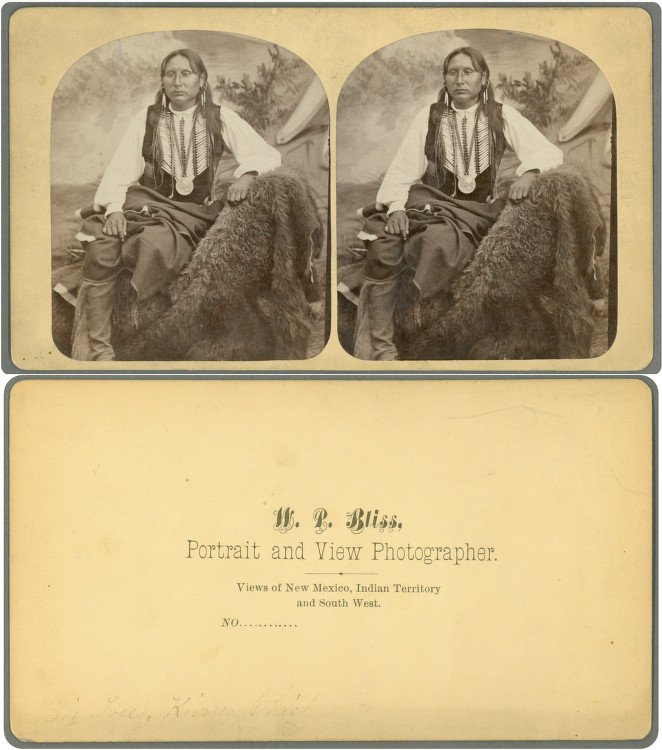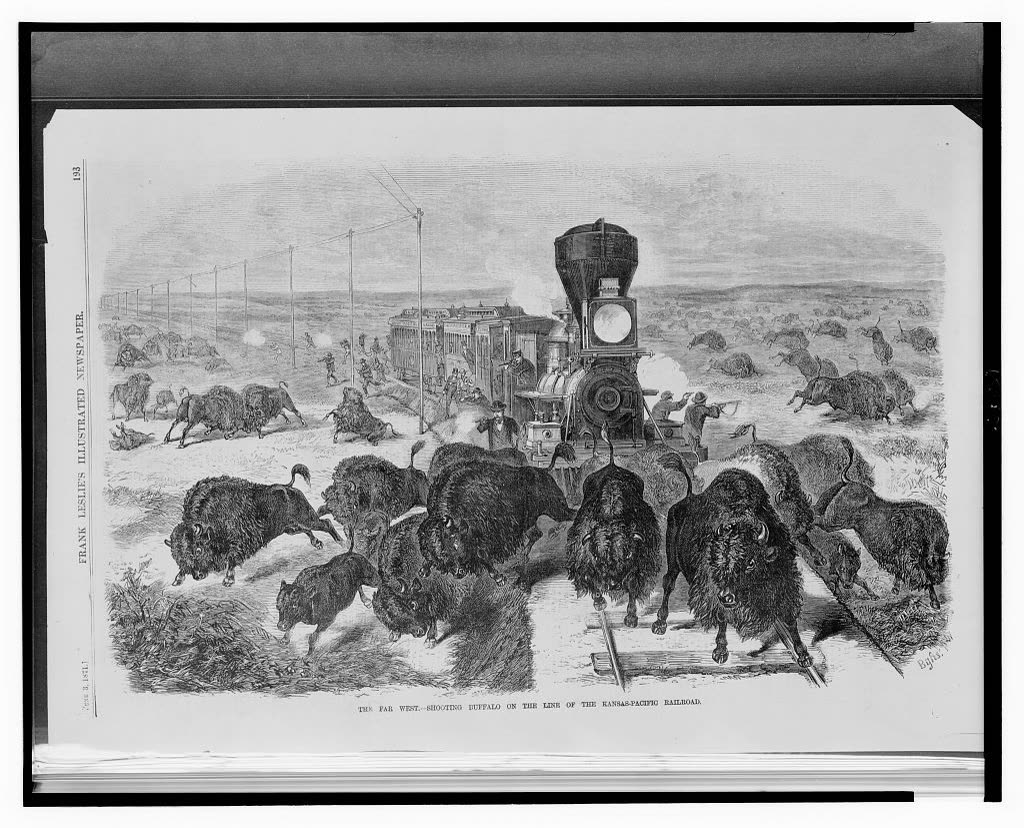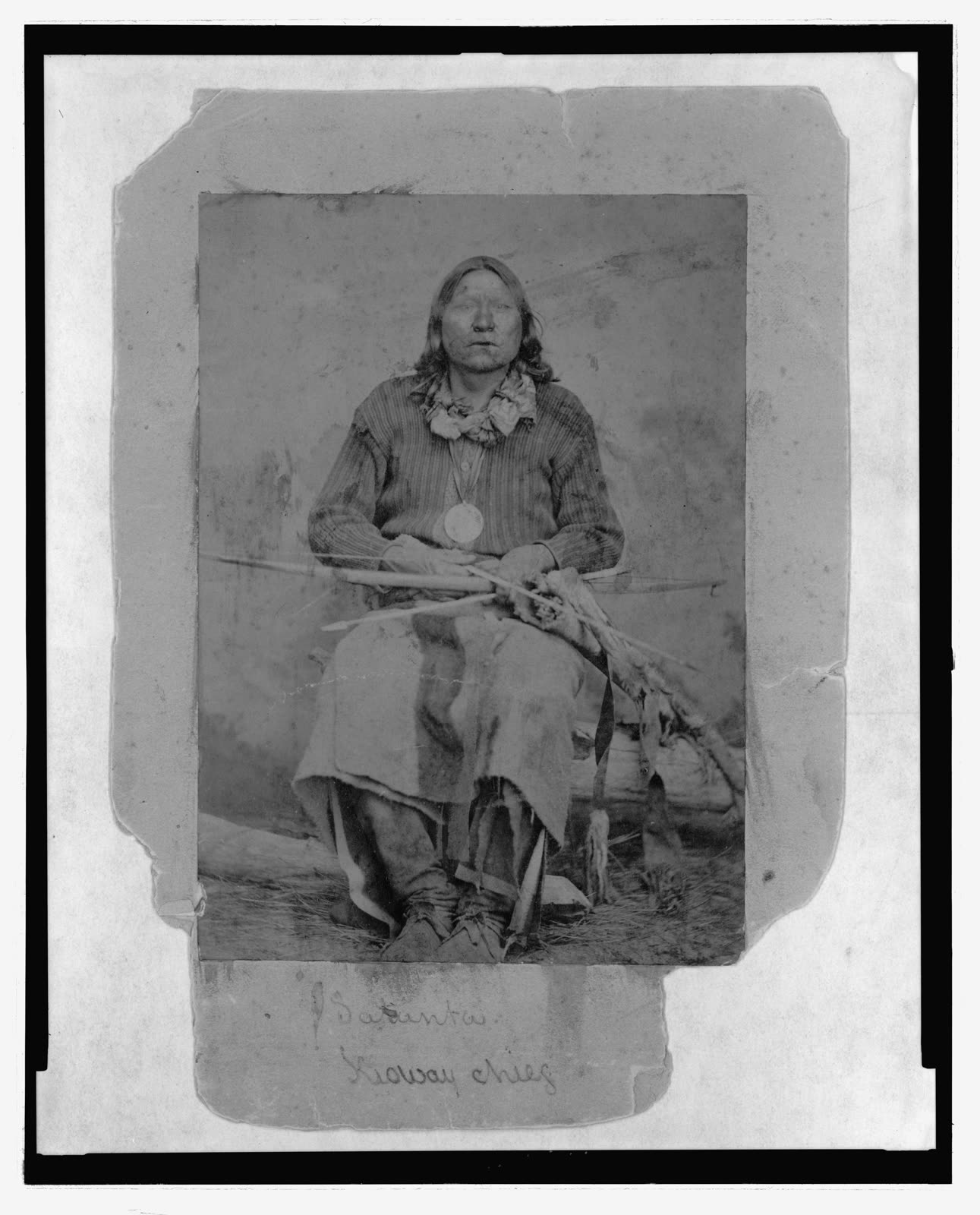
The Warren Wagon Train Raid did not happen in Montague County. Salt Creek Prairie in Young County is roughly sixty miles southwest of the Red River crossings at Spanish Fort, Red River Station, and Illinois Bend that made MoCo a frontier target for three decades. But the raid on May 18, 1871 — and the events it set in motion — is part of Montague County’s frontier history in a direct and documented way: the Kiowa leaders who led the Salt Creek attack operated within the same raiding corridor that crossed MoCo, the raid triggered the first civil-court prosecution of Native American leaders in American history, and the man whose name is most closely associated with MoCo’s frontier-era raids — Big Tree (Adoeette) — was one of the three chiefs arrested and tried as a result.
Understanding the Warren Wagon Train Raid means understanding the context that produced the Jacksboro trial, which in turn is the central legal event in the biography of the most prominent named figure in Montague County’s frontier record.
What Happened at Salt Creek Prairie on May 18, 1871?
A government-contracted wagon train carrying corn — ten wagons, twelve teamsters — was moving through the salt flats of Young County when a combined Kiowa and Comanche war party struck it from the surrounding terrain. The attack came on May 18, 1871.
Seven teamsters were killed. Five wagons were destroyed and looted. Five men survived, one of whom reached Fort Richardson — the US Army post at Jacksboro, Jack County — and reported the attack.
The Kiowa leaders who commanded the raid:
- Satanta (White Bear) — the most senior and politically prominent of the three, known for his oratorical skill and his confrontational approach to Anglo-American authority
- Satank (Sitting Bear) — the oldest of the three principals, a revered war leader and member of the Kaitsenko elite warrior society
- Big Tree (Adoeette) — the youngest of the three, regarded as the most physically formidable warrior. Big Tree was Kiowa, not Comanche — a distinction that contemporary Anglo-Texan records sometimes obscured because Kiowa and Comanche warriors frequently rode together on joint raids. The Kiowa tribal identification is confirmed by TSHA and the Encyclopedia of Oklahoma History.
Eagle Heart and other warriors also held leadership roles in the party, which numbered approximately 100 warriors.
Why Was General Sherman Involved?
The raid’s political consequences were enormous, largely because of who was at Fort Richardson when the survivor’s report arrived.
General William T. Sherman — the commanding general of the US Army, famous for his March to the Sea through Georgia during the Civil War — was on an inspection tour of Texas frontier posts when the news reached him. He had himself passed through the Salt Creek area just hours before the attack, unaware of the raid party positioned nearby. The narrowness of that miss sharpened his response considerably.
Sherman ordered the arrest of the raid’s named leaders. The arrests took place at Fort Sill in Indian Territory — during a council meeting, in a setting that was supposed to be protected diplomatic ground. When Satanta publicly acknowledged his role in the raid during the council, Col. Ranald Mackenzie’s troops moved in.
Satank was placed under guard for transfer to Texas. During that transfer, he sang his death song — the Kiowa warrior’s acknowledgment that he would not survive to stand trial — and attacked his guards. He was killed. Satanta and Big Tree were transported to Texas and placed on trial. What happened next was unprecedented.
Why Did This Raid Change Texas Frontier History?
The Warren Wagon Train Raid was not the largest or deadliest attack in the Texas frontier record — it was not comparable, for example, to the 1863 Illinois Bend raid in Montague County, where approximately 250 warriors killed at least a dozen settlers. But its political consequences were different in kind, because of the arrest that followed.
The trial of Satanta and Big Tree at the Jacksboro courthouse in July 1871 was the first time in American history that Native American leaders were tried in a civil court under Texas state law for acts committed during warfare. That specific historical distinction — confirmed by TSHA’s Handbook of Texas and subsequent legal scholarship — is what the Warren Wagon Train Raid ultimately gave to American history. The military action itself was significant; what followed it was transformative.
The trial drew national attention. Federal Indian rights advocates argued that prosecuting Kiowa war leaders in a Texas state court violated treaty obligations and the sovereignty recognized in those treaties. Texas frontier communities — which had been living under Comanche and Kiowa raid pressure for thirty years — demanded the maximum penalty. Both sides understood that the case was about more than two defendants: it was about whether Texas state law could reach Native American leaders for actions taken in what those leaders understood as defensive warfare for their territory.
Judge Charles Soward convicted both men. Both were sentenced to death. Texas Governor Edmund Davis — under intense federal pressure from the Indian Bureau, which warned that executions might trigger full-scale Kiowa retaliation across the southern Plains — commuted the sentences to life imprisonment. Satanta and Big Tree were sent to the Huntsville State Prison.
The full story of the trial — including the commutation, the 1873 parole, Satanta’s return to prison and 1878 death, and Big Tree’s long life as a Baptist deacon until 1929 — is covered in the dedicated Jacksboro Trial spoke.
What Was the Montague County Connection?
The raid occurred in Young County, sixty miles from Montague County’s Red River crossings. The connection is geographic and corridor-based.
The Comanche-Kiowa raiding corridor that produced the Warren Wagon Train attack was the same geographic system that made Montague County a frontier target for three decades. War parties crossing into Texas from Indian Territory used the Red River fords near Spanish Fort, Red River Station, and Illinois Bend in Montague County as transit points. Once across, they moved south through the Cross Timbers prairie corridors — the same routes used to reach Young County, Palo Pinto County, and the settlements further south. The Salt Creek Prairie attack was conducted by people moving through the same landscape system that MoCo settlers knew as their primary threat.
Big Tree’s connection to Montague County specifically is documented but carries a research qualification. Anglo-settler records — including Mrs. W.R. Potter’s 1913 History of Montague County — attribute the December 1863 Illinois Bend raid to “Big Tree and other leaders,” describing the force that killed at least a dozen Montague County settlers in the most catastrophic single Indigenous military action in the county’s documented history. Whether the “Big Tree” of the 1863 MoCo raid was specifically Adoeette — the same man arrested after the 1871 attack — requires Kiowa THPO consultation before it can be stated as settled. What is established: MoCo settler memory attributed the 1863 raid to the same leader who was arrested and tried at Jacksboro in 1871, and the raiding corridor that produced both events ran through the same landscape.
The Warren Wagon Train Raid is why Big Tree became a nationally known figure rather than a regional one. Without the 1871 attack, the 1863 attribution would be a local historical footnote. With it, Big Tree’s biography connects MoCo’s frontier experience to one of the most-studied episodes in the legal history of the American West.
What Happened After the Raid?
The immediate aftermath:
- Satank killed during transfer to Texas, May 1871
- Satanta and Big Tree tried, convicted, and sentenced to death, July 1871
- Governor Davis commuted sentences to life imprisonment
- Both men confined at Huntsville State Prison
In 1873, after lobbying by Quaker peace advocates and federal Indian Bureau officials — over strong Texas frontier community objection — Governor Davis agreed to parole both men. Big Tree returned to Indian Territory. Satanta returned to raiding, or was accused of it; he was re-imprisoned at Huntsville and died there in 1878, reportedly leaping from an upper-floor window after learning he would never be released.
Big Tree’s trajectory diverged dramatically. He converted to Christianity, became a deacon at the Rainy Mountain Baptist Church near Anadarko, Oklahoma, and died there on November 13, 1929 — a date confirmed by TSHA and the Encyclopedia of Oklahoma History. He was among the last surviving participants in both the 1871 raid and the Jacksboro trial. His long life spanned the height of Kiowa military power, the collapse of Plains resistance, reservation confinement, and the early 20th-century world of Oklahoma statehood and automobiles.
Related Pages
- The Jacksboro Trial (1871) — the full legal story of Satanta and Big Tree’s civil prosecution
- The 1863 Illinois Bend Raid — the Montague County attack attributed to the same Kiowa forces
- Comanche Raiding Routes Through Montague County — the geographic corridor system that connected these events