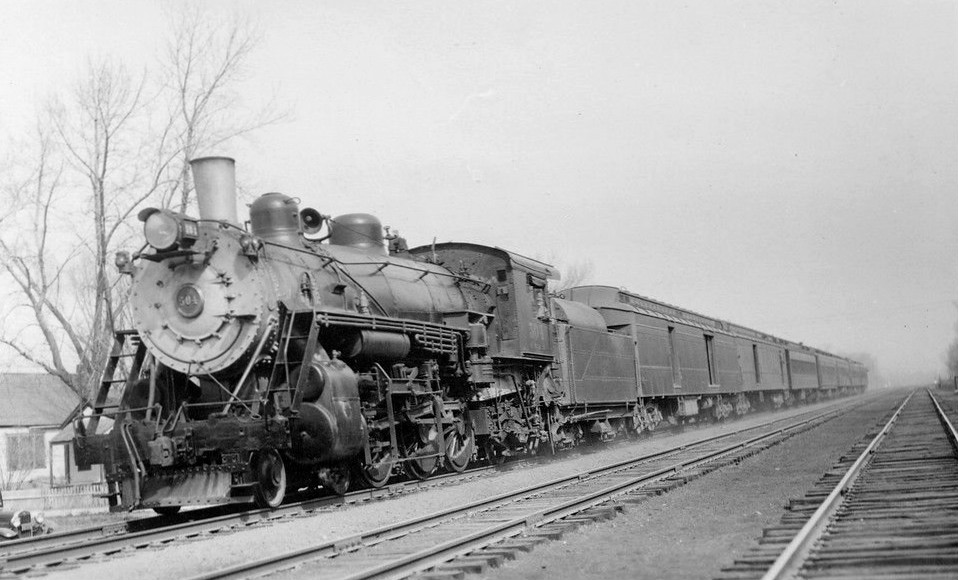
The Fort Worth and Denver Railway arrived in Montague County in 1882. Within a decade, two more major lines had come through. Within a generation, the towns those railroads had founded were among the most prosperous communities in north Texas. Within a century, most of the railroad infrastructure that made that prosperity possible was gone — bankrupted, abandoned, track pulled, depots demolished or repurposed.
The railroads built MoCo as thoroughly as any force in its history. Understanding their loss is understanding a significant part of what MoCo is today: a county whose towns were founded by railroads, whose commercial geography was organized around depots and stockyards and cotton compresses, and which now operates on a highway network that replaced something that once seemed permanent.
The Lines That Came
The Fort Worth and Denver Railway (1882)
The Fort Worth and Denver Railway was MoCo’s first railroad, arriving in 1882 on a north-south route from Fort Worth to Denver, Colorado. The line reached what would become Bowie and in doing so founded the town: Bowie did not exist before the railroad arrived. The depot, the commercial strip along the tracks, and the town’s initial street grid all took their shape from the railroad’s presence.
The FW&D carried the freight and passengers that made the cotton era possible. Cotton bales moved north on freight cars; manufactured goods moved south. Passenger service connected MoCo residents to regional cities. The railroad was the essential economic infrastructure without which the cotton boom would have had no way to move its product to market.
Over time, the FW&D was absorbed into Burlington Northern and then into BNSF (Burlington Northern Santa Fe). Some segments of the original FW&D route remain active under BNSF operation; specific MoCo segments require verification against current BNSF maps.
The Chicago, Rock Island and Texas Railway (1893)
The Chicago, Rock Island and Texas Railway — known universally as the “Rock Island” — reached Bowie in 1893, providing the east-west connectivity that the north-south FW&D lacked. Where the FW&D connected MoCo to Fort Worth and Denver, the Rock Island extended the network toward the east and provided competitive freight rates that benefited county shippers.
The Rock Island system across Texas was part of a larger network that eventually became the Chicago, Rock Island and Pacific Railroad. That corporate structure collapsed in the bankruptcy of 1980 — one of the largest railroad bankruptcies in American history to that point. Rock Island track across north Texas was liquidated through the early 1980s. Most of it was pulled; the right-of-way reverted to property owners or was abandoned in place. The easy-to-see evidence of Rock Island’s former presence — cuts in the landscape, overgrown rights-of-way, occasional culvert structures — fades further each decade.
The GH&W / Santa Fe Line and the Founding of Nocona (1887)
The Galveston, Houston and Western railway reached the area in 1887, and its arrival directly produced Nocona. D.C. Jordan — the town’s founder and commercial anchor — established Nocona as a new commercial center on the railroad line. The town grew around the depot, and Jordan’s various business interests (land, merchandise, eventually boot manufacturing) were organized around railroad-era commerce.
This line went through multiple consolidations over the decades, eventually becoming part of the Gulf, Colorado and Santa Fe system and ultimately BNSF. As with the FW&D, current segment status requires verification.
The Missouri-Kansas-Texas Railroad (MKT / “Katy”)
The Missouri-Kansas-Texas Railroad — the “Katy” — crossed parts of MoCo, particularly through the Ringgold area. Ringgold owed its founding (ca. 1892) to its position at a railroad junction. The MKT was a major regional carrier connecting Texas, Oklahoma, Kansas, and Missouri.
In 1988, the MKT was acquired by Union Pacific, which absorbed it into the UP system. Track status in MoCo under UP/BNSF varies; some segments remain active, others were abandoned.
What the Railroads Built
At the height of the railroad era, every major MoCo town had railroad infrastructure supporting its commercial economy:
Depots served both passenger and freight functions. The depot was the town’s economic heart: goods arrived and departed, mail and express packages moved, and passengers connected to the regional world. Depot architecture ranged from simple wooden structures to more substantial brick buildings as towns grew.
Stockyards handled the cattle shipping that supplemented cotton as MoCo’s primary export. Texas cattle that formerly moved north on trail drives now moved in railroad cars — faster, less expensive, and without the cattle weight loss of a multi-week drive.
Cotton compresses in major shipping points handled the enormous volume of cotton bales moving through MoCo at peak. The 1914 county harvest of 43,595 bales required substantial logistics infrastructure; cotton compresses reduced bale volume for more efficient rail shipment.
Section houses provided housing for the railroad maintenance workers who kept each segment of track in operating condition. Section gangs were a continuous employment source in railroad towns; the workers who lived in section houses represented a layer of railroad-dependent labor largely invisible in the county’s popular history.
Water towers and fuel facilities maintained the steam locomotives that pulled the trains. The transition from steam to diesel in the mid-20th century eliminated these visible landmarks.
The Decline: How Railroads Lost Their Economic Monopoly
The railroad’s economic dominance was real but not permanent. Three forces eroded it through the 20th century:
Trucking competition began in earnest in the 1920s as improved highways and gasoline trucks made less-than-carload freight competitive with rail. A farmer who could put cotton on a truck and drive it to the gin or compress did not need to haul it to the depot. Local and regional freight shifted toward trucks; only long-haul, heavy, and bulk freight retained the economics that favored rail.
Automobile competition eliminated passenger rail’s market. By the 1930s, the family automobile was accessible to most rural Texans; by the 1950s, passenger trains in MoCo were running at loads that made them economically unsustainable. Passenger service was discontinued through the 1950s and 1960s.
Agricultural mechanization changed the labor and logistics patterns of the cotton economy. Fewer workers, more machinery, and the shift from cotton to cattle and oil reduced the volume and type of freight that had sustained multiple competing rail lines. A county that needed several lines to move its cotton harvest might need only one — or none — when cotton acreage declined.
The Abandonment Era
The Rock Island bankruptcy of 1980 was the most dramatic single event in MoCo’s railroad decline, but it was part of a broader pattern of consolidation and abandonment that ran from the 1970s through the 1990s. Track was pulled across the country as railroads sought to concentrate operations on high-density main lines and abandon the branch lines and regional networks that could not support profitable freight volumes.
Abandoned track was generally removed — steel has scrap value — leaving the right-of-way as the primary visible evidence of former rail corridors. In MoCo, this means graded embankments visible from county roads, occasional concrete culvert structures, overgrown cuts through hillsides, and the street grids of towns that were oriented to depots no longer standing.
Rails-to-Trails conversions — transforming abandoned railroad rights-of-way into recreational trail corridors — have been a national trend since the 1980s. MoCo’s participation in this trend has been limited; the most successful regional example (Northeast Texas Trail) is considerably east of the county. Specific MoCo rail-to-trail projects remain a future possibility rather than a current reality.
What Survives
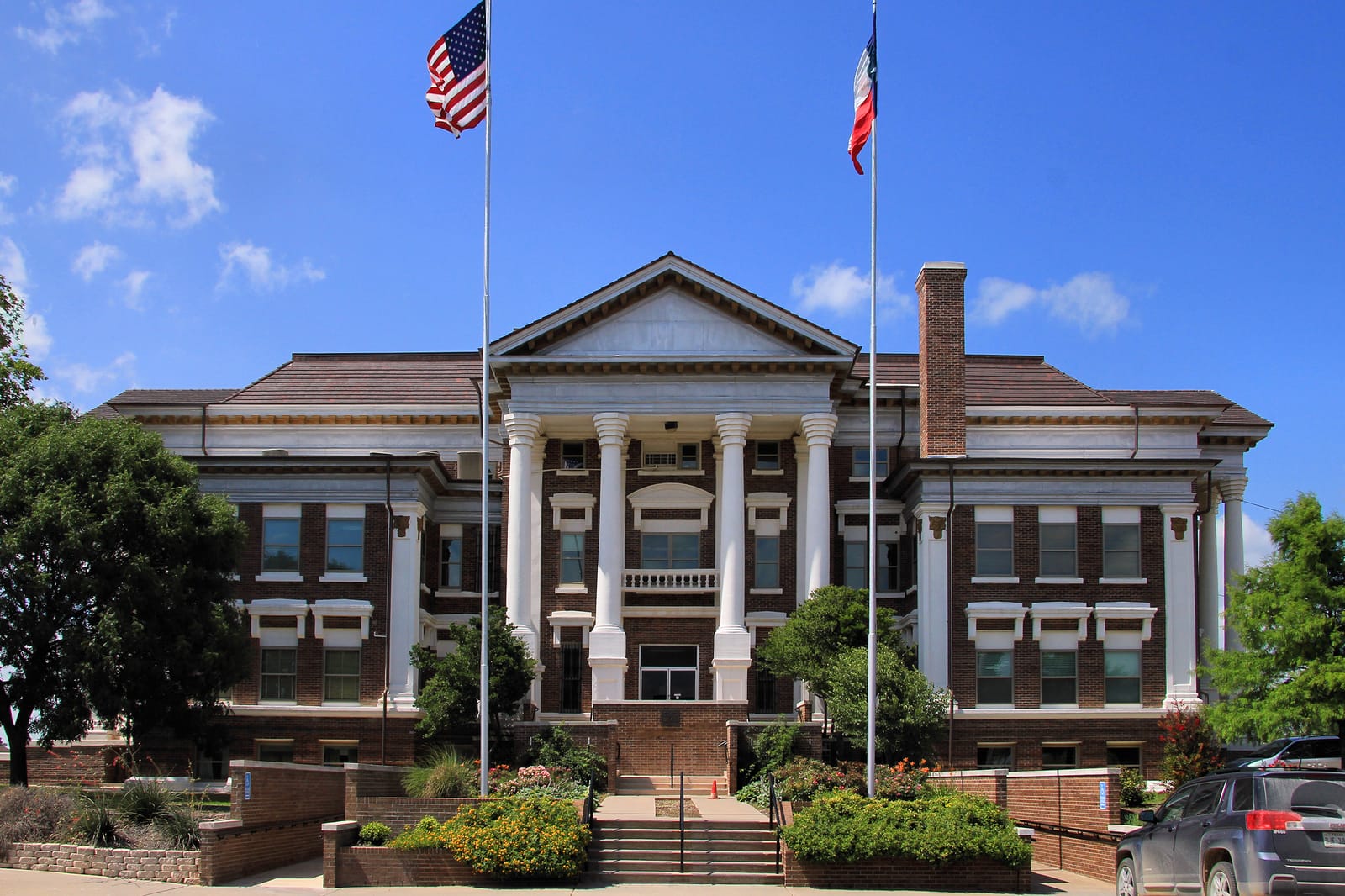
Physical railroad infrastructure that survives in MoCo includes scattered bridges and culvert structures, occasional depot buildings repurposed or preserved, and the most durable element: town street grids oriented to railroad tracks that no longer exist. Bowie’s downtown commercial street grid still reflects the railroad era that organized it; the same is true of Nocona and Ringgold.
The Tales ‘N’ Trails Museum in Nocona preserves railroad-era artifacts among its Western heritage collections. The Bowie history is tightly bound to the railroad founding story. Multi-generational railroad families — engineers, conductors, section workers — are part of the county’s oral history in ways that formal archives have not yet fully captured.
Current rail service in MoCo is limited to whatever BNSF operates on surviving lines, primarily for industrial and bulk freight customers. There is no passenger rail service; the nearest Amtrak service (the Heartland Flyer running Fort Worth to Oklahoma City) does not stop in MoCo.
The possibility of future rail revival — whether through expanded BNSF freight service, Texas high-speed rail discussions, or trail development on abandoned rights-of-way — remains speculative. The highway network has thoroughly replaced rail for moving people and most freight in rural north Texas, with results that are now more than a generation old.
Related pages: Highway Corridors of Montague County · Bowie · Modern Era Index · Ghost Towns of Montague County
Sources: TSHA Handbook of Texas (“Fort Worth and Denver Railway,” “Chicago, Rock Island and Texas Railway,” “Missouri-Kansas-Texas Railroad,” “Galveston, Houston and Western Railway”); Mrs. W.R. Potter, History of Montague County (1913). Major line histories are confirmed in these sources. MoCo-specific abandonment dates line-by-line and surviving rail infrastructure inventory remain outstanding research questions (Texas Railroad Commission rail records; Texas Historical Commission marker database).