The decades from 1945 through the end of the Cold War constitute Montague County’s stabilization era — a period less dramatic in its headline events than the cotton booms and oil rushes that preceded it, but foundational to the county’s modern character. Population settled into a sustainable range. The economy diversified. MoCo men served in Korea and Vietnam, and came home to a county that was changing more slowly than the broader American culture around it.
The era is defined not by a single transformative event but by an accumulation: wars that demanded service, Cold War anxiety that shaped daily life in schools and churches, economic changes that reshaped what it meant to make a living in rural north Texas, and the gradual civic construction of a community identity that persisted from WWII through the century’s end.
The Korean War (1950–1953)
Service and Sacrifice
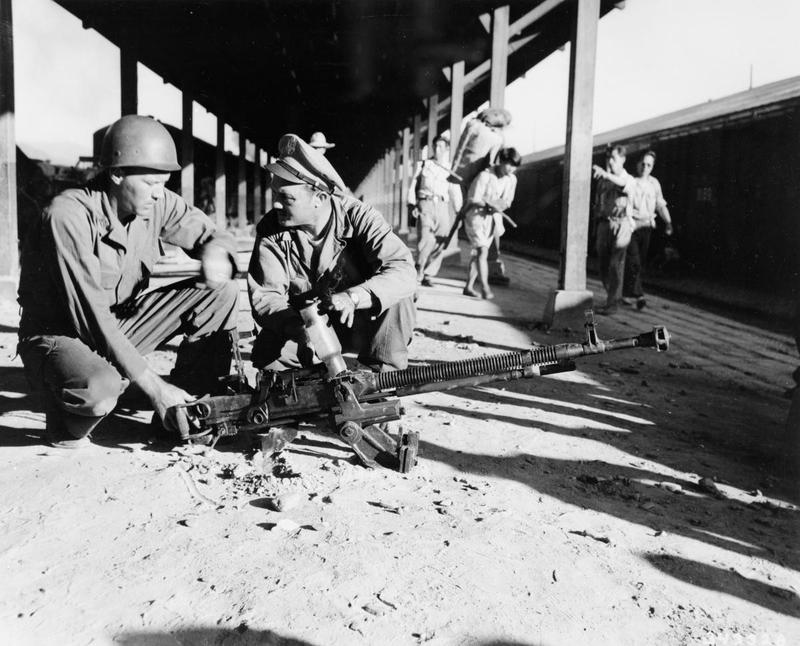
Less than five years after the end of World War II, the United States was at war again. The Korean War began with North Korea’s invasion of South Korea on June 25, 1950, and drew approximately 1.7 million Americans into service over its three years. Texas contributed roughly 289,000 servicemen and suffered approximately 1,700 deaths — a proportionally significant toll from a large state (Source: TSHA Handbook of Texas).
Montague County men served across all branches. Some were WWII veterans recalled through the Selective Service system — men in their late twenties and early thirties who had hoped their fighting days were behind them. Others were young men who had been boys during WWII, now of draft age in a new conflict. The draft remained in effect continuously from 1940 through 1973, and MoCo’s young men registered and served as their fathers and uncles had before them.
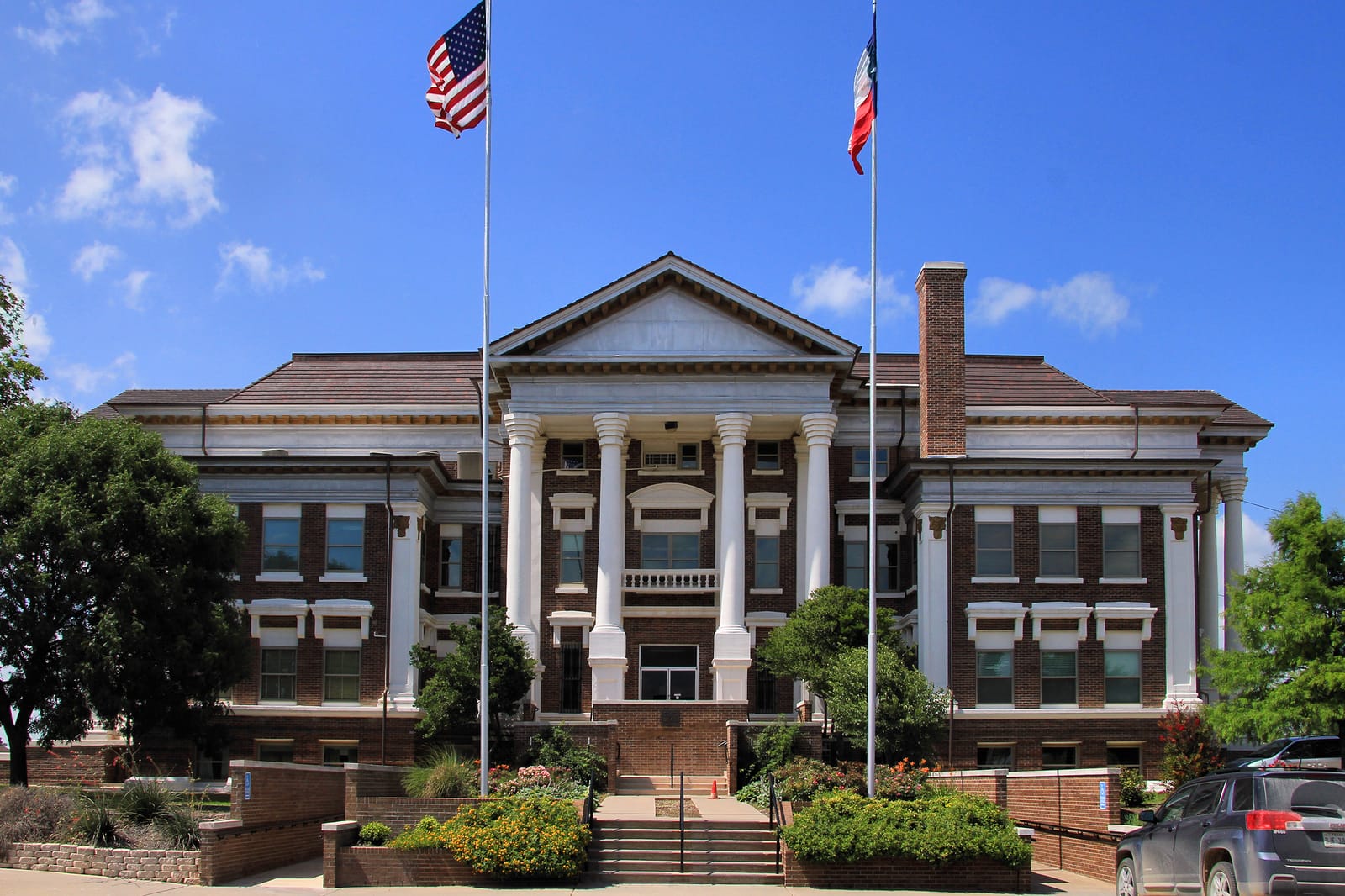
The specific casualty count for Montague County in Korea requires primary research — county clerk records, VA archives, and local memorial inventories — that has not been completed at this research date. What is documented is the pattern: MoCo men served, some did not return, and the Korean War dead are commemorated alongside WWII veterans at courthouse memorials and community cemeteries across the county.
The “Forgotten War”
Korea carries the unfortunate name the “Forgotten War” in American cultural memory — less mythologized than WWII, less politically fraught than Vietnam, wedged between them in both time and national imagination. Veterans returning from Korea often found a reception that was respectful but muted: the country had already processed one war’s worth of sacrifice and was not yet ready to fully absorb another.
In MoCo’s conservative rural community, Korean War veterans were welcomed without the hostility that Vietnam veterans later encountered in some parts of the country. But the war’s ambiguous conclusion — an armistice rather than a victory, a divided peninsula rather than a liberated one — left it without the clean narrative that WWII carried. The Korean War memorials that were eventually erected in Texas communities typically came decades after the war itself, often added as wings to existing WWII monuments.
The Eisenhower Era and the 1950s Drought
Postwar Prosperity and MoCo’s Position
The 1950s brought national economic prosperity that reached into north Texas in uneven ways. MoCo was already transitioning away from the cotton-and-oil economy of its mid-century peak. Cattle dominated agricultural land use. Apple and peach orchards in the southeastern county were approaching their commercial peak. Oil production from the KMA Field continued at reduced levels.
The county was also bypassed by the Interstate Highway System. When Eisenhower’s 1956 highway program built I-35 (east of MoCo, through the Fort Worth-Dallas corridor) and I-44 (north of the Red River, in Oklahoma), Montague County sat between the major arteries. This geographic position had real long-term consequences for economic development, tourism, and the county’s relationship to the growing Dallas-Fort Worth metroplex.
The Drought of Record
The 1950s brought the worst drought in Texas recorded history. The drought devastated cattle operations and agricultural production across north Texas, including Montague County. The response was infrastructure: Lake Amon G. Carter was constructed between 1955 and 1956, and Lake Nocona followed in 1960 — two reservoir projects that added recreational water to the county while providing drought-resilience for municipal water supply.
The Vietnam War (1965–1973)
Service Under a Different Sky
Vietnam differed from Korea in almost every dimension except the fundamental one: Montague County men served and some did not come back.
Texas suffered approximately 3,400 deaths in Vietnam — proportionally one of the heavier state burdens of the conflict (Source: TSHA Handbook of Texas). MoCo casualties are documented in local memorials, but a comprehensive county-specific roster requires the same primary-source work that Korean War casualty research demands: county clerk records, the Vietnam Veterans Memorial database (filtered to Texas, Montague County), and family oral histories.
MoCo men who served in Vietnam often returned to a county that was politically conservative, broadly supportive of the war effort, and generally welcoming to returning veterans in ways that contrasted with the reception in more urban or politically divided communities. The anti-war sentiment that reshaped college campuses and urban America found less traction in rural north Texas. Veterans came home to communities that valued their service even as the broader American conversation about the war grew increasingly conflicted.
The Particular Weight of Agent Orange and PTSD
What the Vietnam era bequeathed that previous wars had not — at least not under those names — was a long-term public health crisis among veterans. Agent Orange exposure, PTSD, and the particular psychological weight of an unpopular war fought in difficult circumstances shaped the lives of Vietnam veterans for decades after their return. MoCo’s veteran community carries this legacy alongside the broader national veteran experience.
The American Legion and VFW posts in Bowie, Nocona, and Saint Jo remained active institutions throughout this period, providing community and advocacy for veterans of Korea, Vietnam, and the Cold War’s various smaller engagements.
The Cold War at Home
Civil Defense
The Cold War was not just a geopolitical condition; it was an atmosphere that reached into everyday life in Montague County through schools, churches, and civic institutions. Air-raid drills became routine in MoCo schools through the 1950s and into the 1960s. Some public buildings were designated as fallout shelters. Civil Defense organizations coordinated community preparedness at the county and town level.
The practical reality of civil defense in a rural north Texas county — hundreds of miles from any significant military target — was modest. But the anxiety was real, and the drills were a consistent feature of growing up in MoCo through the Cold War decades.
Sheppard AFB and Defense Industry Connections
Montague County had no major military installation of its own, but Sheppard Air Force Base in Wichita Falls — the region’s dominant military presence — created economic and social connections. Some MoCo workers commuted west to Sheppard for civilian employment. Some MoCo families had members stationed there, or passed through Sheppard during military training.
The larger defense industry was anchored in the Dallas-Fort Worth area: Bell Helicopter in Fort Worth, General Dynamics (later Lockheed Martin), and LTV — all drew regional workers. MoCo functioned as a commuter county for some defense-industry employees during the Cold War’s industrial peak, a pattern that connected the county to the national defense economy even without hosting a plant or base of its own.
Population and Civic Life
Stabilization
MoCo’s population figures through the postwar era tell the stabilization story plainly:
| Year | Population |
|---|---|
| 1950 | ~14,000 |
| 1960 | ~13,000 |
| 1970 | ~14,500 |
| 1980 | ~17,400 |
| 1990 | ~17,300 |
After the sharp declines of the cotton-collapse era, the county settled into a range of 13,000–17,000 that reflected a sustainable if modest economic base: cattle ranching, oil and gas at reduced levels, leather manufacturing (Justin Boots, Nokona), and the small-business economies of Bowie, Nocona, and Saint Jo. The modest 1970s–1980s growth reflected some return migration and spillover from the growing DFW metroplex.
Politics
The political realignment of rural Texas played out across Montague County through these decades. The county was solidly Democratic through the 1950s and 1970s — the Democratic loyalty of rural Texas rooted partly in New Deal-era programs (including rural electrification) and partly in the cultural conservatism that the Democratic Party still encompassed at the local level in this period. The shift to Republican alignment began in the 1980s, consistent with the broader rural Texas realignment driven by cultural and social issues rather than economic ones.
Community Institutions
Football remained the central civic ritual of MoCo school culture. The American Legion, VFW, Lions Club, Rotary, and Masonic lodges provided the organizational infrastructure of civic life in each town. The 4-H and FFA programs connected agricultural education to community identity for a generation of rural youth.
Television arrived in the 1950s and wired MoCo households into the national cultural conversation — country music, Cold War movies, national news, and the national narrative of postwar American prosperity — while the county’s physical distance from urban centers preserved a distinctly rural pace and identity.
The Big Picture
Korea through the Cold War was Montague County’s stabilization era. The turbulence of the cotton-and-oil decades gave way to a quieter pattern: veterans serving, returning, and building civic institutions; population holding steady rather than collapsing; economy diversifying without dramatically transforming. It is not the most dramatic chapter of the county’s history, but it is the foundational period for the community that exists today — a county whose modern identity was formed in the mid-century decades when the crises were smaller but the choices about how to live here were being made continuously and collectively.
Related pages: WWII Service and Home Front · WWI Service and Home Front · Modern Era Index
Sources: TSHA Handbook of Texas, “Korean War,” “Vietnam War,” “Selective Service,” “Vietnamese” (tshaonline.org); postwar-eras-korea-vietnam.md. MoCo-specific veteran rolls, memorial inventory, and oral histories remain outstanding research questions.