December 7, 1941 reached Montague County the way it reached every American community: through the radio.
The Japanese attack on Pearl Harbor, the declaration of war that followed on December 8, and Germany and Italy’s declaration of war on the United States on December 11 set in motion a mobilization that would draw thousands of MoCo men out of the county’s farms, towns, and families and into the largest war in human history. They served in every branch, in every theater — Europe, the Pacific, the Mediterranean, North Africa, the China-Burma-India corridor — and they came home to a county changed by their absence and shaped permanently by their return.
At home, the war transformed Montague County’s small industrial base in ways that connected the county directly to the national effort. The most specific documented case is the Nokona Glove Company in Nocona, which converted its leather-goods operation to produce gloves for American servicemen at a scale the company had never approached before. It is the kind of story that doesn’t make national headlines — a small leather shop in a small north Texas town, scaling up to meet a military contract — but it is exactly the kind of story that constitutes what the home front actually was.
Mobilization
The Scale of Texas Service
The Selective Service Act had been in place since 1940; after Pearl Harbor, it expanded to meet the demand. Approximately 750,000 Texans served in World War II, drawn from a state population of roughly six million — a mobilization rate that reflected both patriotic response and the draft’s systematic reach. Texas suffered approximately 23,000 deaths in the conflict (Source: TSHA Handbook of Texas).
Montague County men served in all branches: Army, Navy, Marines, Coast Guard, Army Air Corps (later Air Force). Some volunteered immediately after Pearl Harbor. Most were drafted through the county draft board, which processed registrations, classified men by status, and issued induction orders on the timelines the national mobilization required.
The specific MoCo enlistment numbers and casualty count await primary-source documentation — county clerk records, state archives, and local memorial inventories. What is documented is the pattern: MoCo’s young men went, some in the dozens died, and the war’s presence in the county was registered at the individual family level through Western Union telegrams, Gold Star flags, and the particular silence that settles into a community when its young men are absent.
Training Installations
Texas was a major training hub for the national mobilization. Nearby installations included Camp Howze at Gainesville (Cooke County, east of MoCo), which trained infantry divisions; Camp Wolters near Mineral Wells; and Fort Hood to the south. The Army Air Corps trained at multiple Texas fields. MoCo men passed through these installations on their way to deployment; some wives and families followed their husbands to nearby camps for brief periods before overseas assignment.
The Nokona Glove Company: MoCo’s Home-Front Industrial Story
Before the War
The Nokona Glove Company of Nocona, Texas — formally “Nocona Athletic Goods Company” under its trademark filings — had been producing baseball gloves since the early 1930s, when Bob Storey of the founding Storey family pivoted the 1926 leather-goods company toward sporting equipment. By the late 1930s, Nokona was an established regional producer of handmade gloves, operating at the craft-shop pace of approximately 50 to 100 gloves per day.
The original Nokona product line was not baseball gloves: the 1926 company founded by Cadmus “Cad” McCall and T.B. Wilkes made wallets, purses, and belts. Baseball gloves entered the product line in 1932–1934, when the Storey family’s Bob Storey applied the company’s leather-working expertise to sporting goods production. The “Nokona” trademark was registered in 1934 — the “k” substituted for a “c” because federal trademark law would not permit a town’s name as a product trademark.
The 1942 Military Contract
In 1942, Nokona received a US government contract to produce baseball gloves for distribution to American servicemen stationed worldwide (Source: regional research files; specific NARA contract terms pending primary-source verification).
The production expansion was dramatic: from approximately 50–100 gloves per day to approximately 1,000 gloves per day — a tenfold increase that required significant workforce expansion, floor reorganization, and supply-chain acceleration. This was the transformation of a craft shop into a wartime production facility.
One important clarification on the historical record: earlier accounts described the Nokona WWII contract as involving “kangaroo-leather goods” for paratroopers and aviators. Research against primary sources has corrected this claim. The WWII contract was for standard baseball gloves for servicemen — consistent with the documented wartime policy of maintaining military morale through access to sports equipment. Nokona’s landmark kangaroo leather innovation came later, in 1957, when the company became the first glove manufacturer to use kangaroo hide in production. Specific contract terms remain unconfirmed pending NARA primary-source verification (Record Group 179, War Production Board records; “Nocona Athletic Goods Mfg. Co.”).
The military contract’s significance extends beyond production numbers. It established Nokona’s capacity for high-volume output, gave the company wartime credibility and federal procurement relationships, and positioned it for the postwar baseball boom in a way that a company limited to craft-shop production might not have managed. The war, in this sense, made Nokona the company it became.
For the full Nokona history — including the 1957 kangaroo leather innovation, the 2006 factory fire, and the company’s persistence as one of the last domestic glove manufacturers — see Nokona Glove Company.
Agricultural and Economic Home Front
Wartime Production
MoCo’s agricultural economy shifted to maximum output under wartime demand:
- Beef cattle met the primary demand for military rations and home front consumption
- Cotton — diminished from its pre-boll-weevil peak but still present — served military textile and parachute needs
- Wheat and grain contributed to food supply for military and Lend-Lease
- Oil and gas from the KMA Field operated at production levels that contributed directly to the petroleum demands of a mechanized war
- Hay, corn, and milo supplied the feed grain demands created by the livestock mobilization
Labor Shortages and the Bracero Program
With a significant fraction of the male workforce in military service, agricultural labor became scarce. The Bracero Program (1942–1964), a bilateral labor agreement between the US and Mexico, brought Mexican workers to fill agricultural labor gaps across Texas and the Southwest. MoCo’s specific participation in the Bracero Program — which farms used the program, how many workers arrived, what their experience was — requires primary-source research that has not been completed. The program was real and its reach into rural north Texas counties consistent with the documented regional pattern.
Women’s agricultural labor expanded, as it did nationally. Children’s labor at peak harvest times continued. The farm that lost its principal adult male workers to military service still needed to produce.
Rationing and Civilian Life
The Ration Book
The war reached every MoCo household through the ration book. Sugar, coffee, meat, butter, gasoline, tires, and shoes — all were rationed through a point-based system administered by local ration boards. The boards, staffed by community volunteers, distributed ration books, processed exemption applications, and managed the community’s allocation of scarce goods.
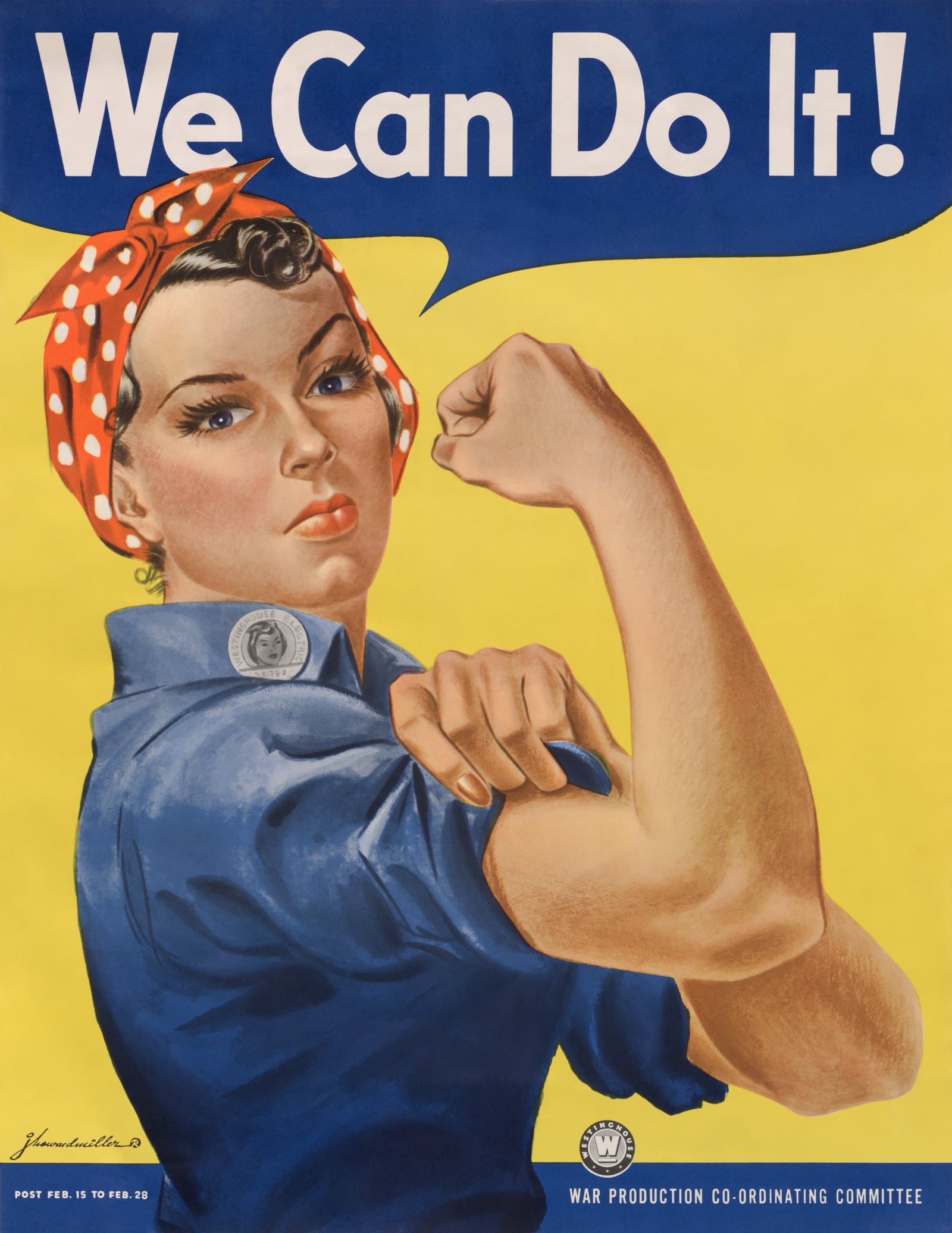
Victory gardens supplemented rationed food supplies. Scrap drives collected metal, rubber, and paper for war production; some communities permanently lost their decorative iron fences and ironwork to the scrap drives, donated to the war effort and melted down.
The social pressure of the home-front effort was real. Communities competed in bond drives and scrap drives; families who appeared to be consuming more than their share risked community disapproval. In a small county where everyone knew everyone, the informal enforcement of wartime norms was as effective as any official mechanism.
War Bond Drives
Multiple war bond drives through 1942–1945 solicited investment from MoCo households, businesses, schools, and churches. Schools organized student bond purchases; businesses subscribed publicly; churches incorporated bond drive participation into their community programs. The drives raised money for the war effort while simultaneously building civic participation in the national mobilization — connecting MoCo’s residents to the larger purpose through the specific act of writing a check.
Radio and Information
The expansion of radio access through the rural electrification of the 1930s and 1940s meant that by WWII, MoCo farm households could hear the war’s news as it happened. Roosevelt’s radio addresses, news bulletins, and wartime broadcasts reached the same farmhouses that had been silent to national broadcast just a decade before. The REA lines and the radio together connected rural MoCo to a shared national experience in ways that had not been possible in WWI.
Casualties and Memorial
The Western Union Telegram
The War Department’s casualty notification system, established in 1943, delivered news of overseas deaths through Western Union telegrams delivered by a uniformed officer. In Montague County, as across rural America, these deliveries were the central dread of the wartime home front. The memory of the telegram — who received it, when, what happened next — is carried in older county families as one of the war’s most specific and most permanent impressions.
Gold Star flags displayed in windows marked households that had lost a serviceman. The visible geography of wartime loss in a small community was significant: in a town of a few thousand, the windows with Gold Star flags were not abstract — they were the Johnsons on Oak Street, the Martinez family near the gin, the Smiths from out toward Saint Jo.
Memorials
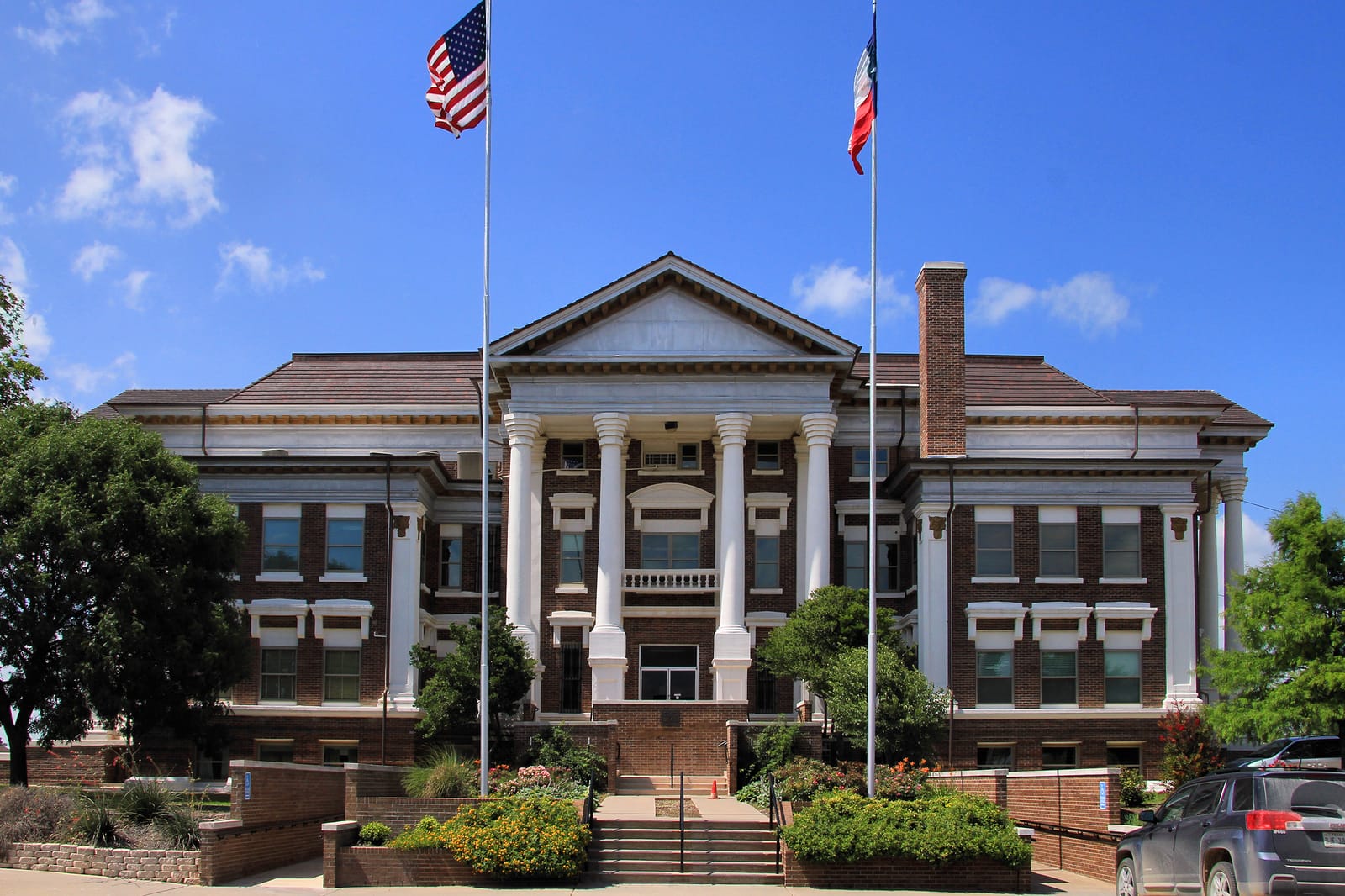
WWII memorials in Montague County are distributed across community institutions: the courthouse grounds in Montague, town memorials in Bowie, Nocona, and Saint Jo, honor rolls at schools and churches, and cemetery markers with veteran designation. Elmwood Cemetery in Bowie — confirmed by THC marker inscription as containing WWII veteran burials alongside WWI, Korea, and Vietnam veterans — is the county’s most formally documented multi-war veteran burial site.
The Veterans Return: GI Bill and After
Demobilization
MoCo veterans began returning through 1945 and 1946 — gradually, as the discharge machinery processed the massive number of men released from service. They came home to a county that had held, economically and socially, but that had changed during their absence in ways large and small.
The GI Bill (Servicemen’s Readjustment Act of 1944) provided home loan benefits, education and training funding, unemployment insurance, and VA medical care. Its impact on MoCo veteran families was substantial: home loans financed new construction, education benefits funded college and vocational training that would not otherwise have been accessible, and the VA medical system provided healthcare for service-connected conditions that would follow veterans for decades.
The Greatest Generation in MoCo
The WWII veterans who returned to Montague County became its civic generation. American Legion and VFW posts active through the 1950s and 1960s were staffed by these men; school boards, city councils, county government, and business leadership drew from the same cohort. The “Greatest Generation” mythology that has attached itself to the WWII cohort nationally has its real foundation in what these specific men actually did: they left, they served, they came back, and they built the mid-century institutions that defined the county’s postwar character.
Some did not come back to the county. GI Bill education and postwar mobility took some MoCo veterans to cities and opportunities that the county could not match. This out-migration was real and was part of the broader demographic pattern by which rural Texas began slowly losing its youngest and most mobile residents to urban opportunity. But enough came back to sustain the community, and the ones who did brought home something that hadn’t existed before the war: a generation that had seen the world.
The Big Picture
World War II was the single largest mobilization in Montague County history, and its effects ran deeper than any previous conflict. The war took thousands of men from the county’s farms and towns, transformed a leather goods company into a wartime production facility, organized the home front through rationing, bond drives, and civic mobilization, and returned veterans who would shape the county’s identity for the next four decades.
The Nokona Glove Company’s 1942 contract is the most specific documented marker of MoCo’s industrial home-front contribution. But behind it stand the unnamed enlistees, the families managing farms short-handed, the women preserving food and rolling bandages, and the Gold Star mothers whose windows told the story of what the mobilization actually cost.
Related pages: Nokona Glove Company · WWI Service and Home Front · Postwar Eras: Korea and Vietnam · Modern Era Index
Sources: TSHA Handbook of Texas, “Texas in World War II,” “Bracero Program” (tshaonline.org); Nokona WWII contract: baseball gloves for servicemen confirmed via SABR Journal; the kangaroo-leather claim is unconfirmed and awaits NARA RG 179 primary-source verification (Record Group 179, War Production Board records). MoCo casualty list and specific Bracero Program participation are outstanding research questions.