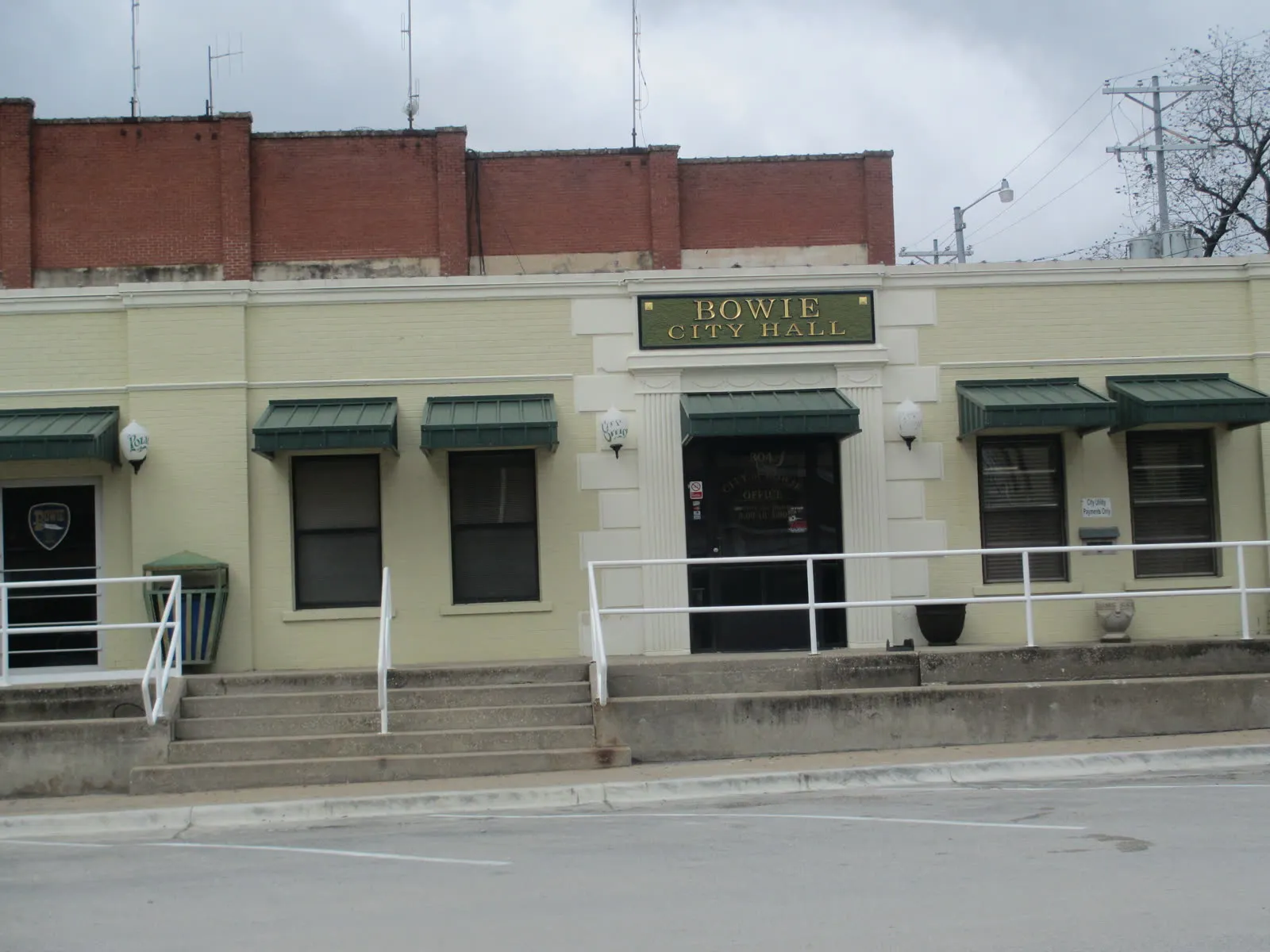
Largest city in Montague County. Founded as a Fort Worth & Denver construction camp in 1882 — a second railroad (Rock Island) followed in 1893 — Bowie is the county's regional hub for grocery, hardware, and healthcare, and home to the Guinness-certified World's Largest Bowie Knife.
At a glance
- Population
- 5,448 (2020 census)
- Founded
- 1882
- ZIP code
- 76230
- Status
- Incorporated city
- Distance
- 15 mi from Montague
- Role
- County commercial hub — grocery, hardware, healthcare, and trade events
- County
- Montague
- Population
- 5,448
- Location
- West-central Montague County, US-81/287
- Founded
- 1882 — Fort Worth and Denver City Railway
- Named for
- James Bowie (of Alamo fame)
- Notable
- Lake Amon G. Carter; Jim Bowie Days (annual, since 1967); World's Largest Bowie Knife (Guinness-certified 2016)
- Elevation
- ~1,110 feet
Founding
Bowie grew from a Fort Worth & Denver City Railway construction camp staked in 1882, becoming the county's market and banking center between Fort Worth and Wichita Falls within three years; a second rail line (Chicago, Rock Island and Texas Railway) arrived in 1893, cementing its position as the region's only railroad junction.
Bowie is the largest city in Montague County and the county’s primary commercial hub. With a population of 5,448 (2020 census), it is roughly five times the size of the next largest community and serves as the functional economic center for the county’s western and central areas.
Railroad Origins
Bowie was established in 1882 when the Fort Worth and Denver City Railway pushed through Montague County. Like most north Texas towns of the era, it was a railroad-driven creation: the settlement took shape at a depot stop, platted and named quickly to take advantage of the commercial opportunity the railroad presented. It was named after James Bowie, the frontier figure and Alamo defender known for the knife that bears his name — a naming choice typical of Texas railroad-era communities reaching for historical resonance.
The railroad made Bowie the county’s commercial anchor almost immediately. Its position on the main line gave it an advantage over Montague, the county seat, which never gained direct rail access. By the late 19th century, Bowie had surpassed Montague in population and commercial activity, a reversal that has defined county dynamics ever since.
Lake Amon G. Carter
The city’s principal water supply and outdoor recreation destination is Lake Amon G. Carter, a 1,540-acre reservoir on Big Sandy Creek built in 1956 in response to the decade’s drought of record. The lake serves dual roles as municipal water supply for Bowie and as a regional fishing and boating destination. See Lake Amon G. Carter for the full account.
Bowie Today
US-81/287 runs through Bowie, connecting it to Wichita Falls to the north and the DFW area to the south. The city supports a full range of services for county residents: healthcare, retail, schools, and county-seat-adjacent government functions (though Montague remains the official county seat). The annual Jim Bowie Days — held every June since 1967 — draws visitors and celebrates the town’s naming heritage.
Related places: Lake Amon G. Carter | Montague | Nocona
From the archives
Bowie in the editorial record
Start exploring