Sourcing note: No primary-source documentation has confirmed a named telephone operator named Sarah who died in Bowie under unusual circumstances. Southwestern Bell’s presence in Bowie from 1912 onward and the occupational profile of telephone operators are documented fact. All paranormal claims are oral tradition. The archival search is exhaustive but not complete — critical archives (Sanborn maps, Montague County death microfilm, AT&T corporate records) have not been physically examined.
Confidence tier: Low — oral tradition only; no primary-source anchor located to date
Who is the “Sarah” ghost of Bowie?
“Sarah” is the name attached to an oral-tradition ghost story set in downtown Bowie’s N. Mason Street block, describing a young telephone operator employed by Southwestern Bell who died in or near the exchange building and is said to haunt what is now a retail and dining corridor. No primary-source documentation has confirmed a named operator who died under unusual circumstances at this location.
The legend circulates through paranormal aggregator databases and local oral tradition. It consistently describes a female figure, auditory phenomena (ringing, voices on dead lines), and poltergeist-adjacent activity in a building that once housed a telephone exchange. The address is not specified in any aggregator source. The story’s basic structure — a woman who worked at a bounded, female-gendered workplace and never left — is a recognized archetype in American workplace ghost lore.
What was Southwestern Bell’s presence in Bowie?
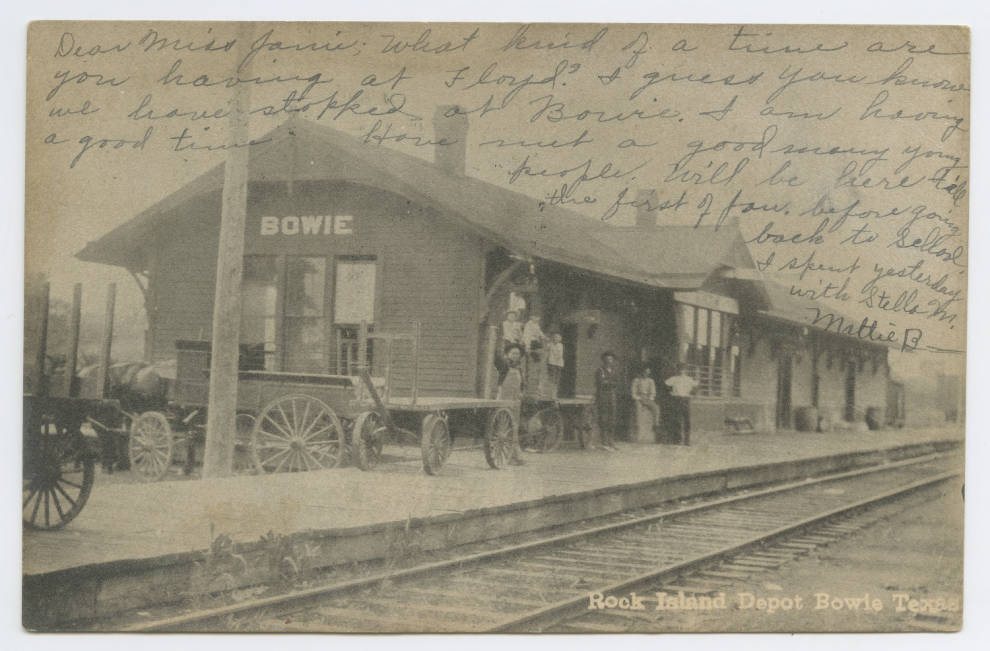
Southwestern Bell Telephone Company became the operator of the Bowie exchange on March 1, 1912, when it was formed by the consolidation of four predecessor companies, including Southwestern Telegraph and Telephone, which had previously served north Texas towns including Bowie. SWBell operated as the uncontested telephone monopoly in Bowie from that date through the Bell System breakup in 1984.
A 1946 Bowie, Texas Southwestern Bell Telephone Directory (documented on eBay as a physical artifact) confirms SWBell’s active service. A June 22, 1953 Montague County Times advertisement promoted SWBell rural telephone expansion. The Bowie News of November 30, 1961 includes consumer telephone content from the SWBell era.
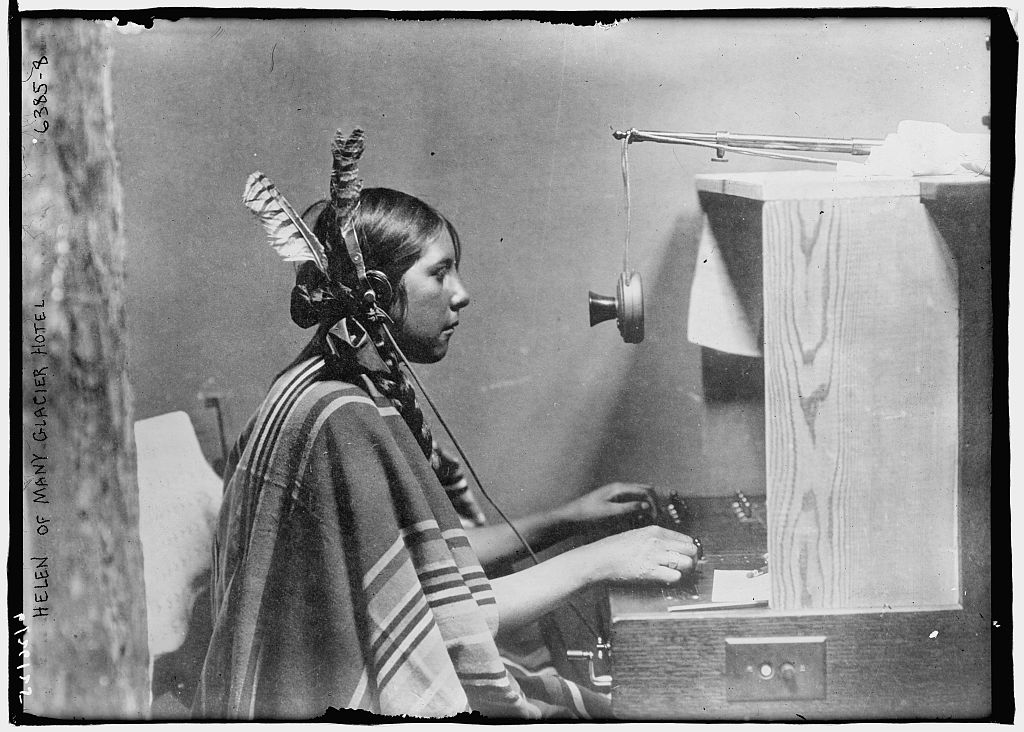
The telephone operators who staffed the Bowie exchange during the manual switchboard period — estimated at 1912 through approximately 1958–1963, when dial service likely reached Bowie — were almost certainly young, unmarried women. Bell System hiring requirements from the 1910s through 1940s mandated that operators be unmarried, between roughly 17 and 26 years old, tall enough to reach the switchboard’s top row, and trained to project a professionally calm, polite demeanor on every call.
Any woman who worked as a telephone operator in Bowie during this 45–50 year window would correctly be described as a “Southwestern Bell” employee — though if the legend’s events predate March 1, 1912, the correct corporate name would be Southwestern Telegraph and Telephone. Popular memory routinely applies the more familiar brand name retroactively.
Where was the telephone exchange building?
The physical address of the Southwestern Bell central office in Bowie has not been confirmed from any digitized primary source. Sanborn Fire Insurance Maps from 1902, 1908, 1922, and 1932 contain the answer — telephone exchanges on Sanborn maps are labeled “Tel. Exch.” or “Telephone Exchange” and occupied dedicated buildings with distinctive footprints — but these map images have not been directly inspected in available research.
The 1908 Sanborn map (Sheet labeled Mason × Tarrant, per adjacent research on the bowie-three-questions dossier) labels the telephone exchange building at the Mason and Tarrant Street block — a location adjacent to but distinct from the 210–222 N. Mason block where The Rack Pub and Eatery, Doc’s Sports Grill, and The Belladonna currently operate.
The oral-tradition legend describes “a store and an adjacent diner” — a structural description consistent with the N. Mason block. No documentary source places the SWBell exchange at 210, 220, or 222 N. Mason specifically.
The nearest documented geographic clue: Community Telephone (the modern local exchange carrier succeeding SWBell in small-town infrastructure) has or had a presence at 220 W. Wise Street, Bowie — on the Wise Street corridor perpendicular to Mason Street. Whether this address traces to the historic SWBell exchange building could not be confirmed.
Has a real “Sarah” been identified?
An exhaustive search of 11 cemetery candidates at Elmwood Cemetery, Montague County death records (1903–1938), federal census data (1920–1940), and Portal to Texas History full-text newspaper databases found no woman named Sarah, Sara, or Sallie documented as a telephone operator in Bowie who died on the job or under unusual circumstances.
The search identified one candidate who cannot be ruled out on age or temporal grounds: Sarah Ida Lively (Elmwood Cemetery, Lot D-102-W), whose birth and death dates are recorded as unknown in the cemetery transcription. Every other identified Sarah or Sallie from Montague County cemeteries is eliminable on age, era, or geographic grounds.
The following archives were searched and returned negative results for a telephone-operator named Sarah:
- RootsWeb and KempChronicles Elmwood Cemetery transcriptions (8,021 memorials)
- Portal to Texas History full-text search of the Bowie News and Bowie Blade
- Federal census manuscript schedules 1920, 1930, 1940 for Montague County
The following archives have NOT yet been physically examined:
- Montague County death records, TSLAC Reel 1435327 (1903–1917) — would confirm or rule out any Sarah who died in the switchboard era
- Sanborn Fire Insurance Maps, Library of Congress, Bowie editions 1902, 1908, 1922 — would confirm the exchange building address
- 1946 Bowie SWBell Telephone Directory — the inside cover or back matter would list the Bowie central office address
- AT&T corporate archives, San Antonio — historical employee records for the Bell System, including any injury or death logs
The question remains genuinely open rather than resolved in the negative.
What is the phantom-operator archetype?
The telephone operator became a recognizable American ghost-story archetype because the occupation was almost exclusively female, spatially bounded to a fixed switchboard, emotionally demanding, and ended abruptly when dial automation made the job obsolete. The conditions that generate workplace ghost legends — a defined role, a specific location, a woman who is under-seen or dies in connection with her work — were structurally present in every Bell System central office.
Comparable Texas legends:
- Sallie White, Menger Hotel, San Antonio: anchored to an 1876 receipt documenting her murder. Historical anchoring is strong — the strongest of any Texas named ghost.
- Audra, Hotel Galvez, Galveston: describes a woman who hanged herself in the mid-1950s after learning her fiancé’s ship capsized. No death certificate, coroner’s report, or contemporaneous newspaper account has been identified. Historical anchoring: absent.
- Lady of White Rock Lake, Dallas: Vanishing Hitchhiker variant; real drownings at White Rock Lake are documented but no drowning matches all story details.
The Bowie Sarah legend ranks between Audra and the White Rock Lake lady in terms of historical anchoring: locally specific (not a borrowed template), conforming to the phantom-operator archetype, and without a primary-source anchor so far — but with a genuine institutional seed (SWBell’s documented presence) and a genuine occupational history (women telephone workers in Bowie from 1912 through the 1960s) that the story draws on.
What to look for next
4 research leads that would resolve the core questions:
- Inspect Sanborn maps for Bowie, 1908 edition (LOC item sanborn08437), Sheet 3 or 4 covering the Mason × Tarrant block. The exchange building’s street address is labeled there.
- Order TSLAC Reel 1435327 (Montague County death records, 1903–1917) and search for Sarah, Sara, or Sallie with occupation “telephone operator” or employer “Southwestern Bell.”
- Acquire the 1946 Bowie SWBell Telephone Directory and read the central office address from the inside cover.
- Locate Sarah Ida Lively’s memorial on Find a Grave (Elmwood Cemetery, ID 3429) and retrieve birth and death dates.
Until those archives are examined, this page presents what the record gives: a name, an occupation, a block of downtown Bowie, and a tradition with deep occupational roots.
Sources
folklore/bowie-sarah-ghost-dossier.md— full archival research: building addresses, SWBell merger date, switchboard demographic profile, cemetery candidates, negative search results.- TSHA Handbook of Texas — “Telephone Service”: SWBell formation March 1, 1912; dial history in Texas.
- Portal to Texas History — Montague County Times June 22, 1953 (SWBell ad); Bowie News November 30, 1961 (telephone column).
- Sanborn Fire Insurance Maps for Bowie, Texas (LOC items sanborn08437_001 through sanborn08437_006) — not yet directly inspected.
- Goldstein, Diane E., Sylvia Ann Grider, and Jeannie Banks Thomas. Haunting Experiences: Ghosts in Contemporary Folklore. Utah State University Press, 2007.
- Dégh, Linda. Legend and Belief: Dialectics of a Folklore Genre. Indiana University Press, 2001.
For companion Bowie folklore, see the 1907 Hargrove Shooting and the Bowie Three Historical Questions. For the broader oral-tradition record, see the Folklore hub.