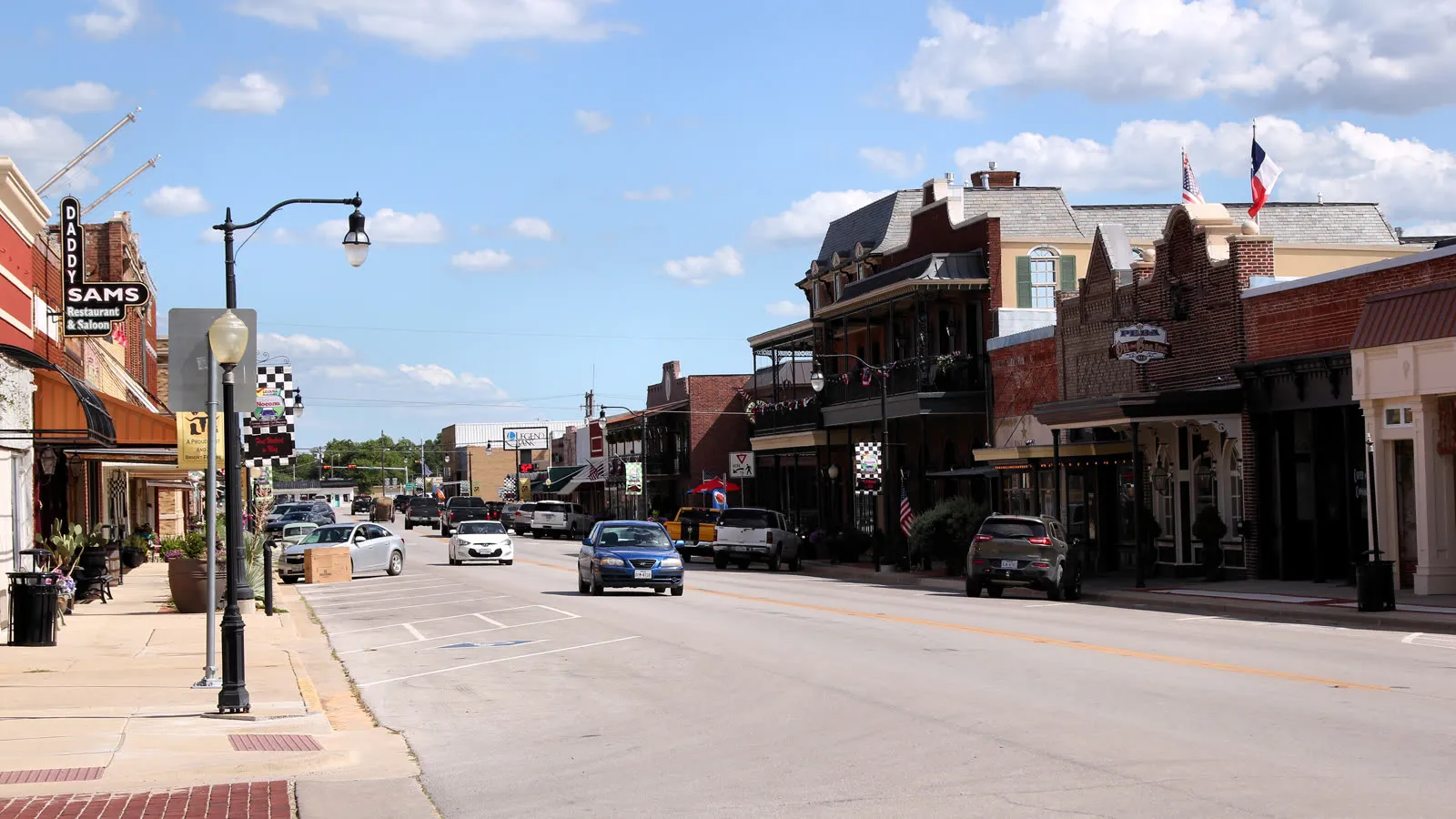
Founded 1887 when rancher D.C. Jordan donated land along the Gainesville, Henrietta & Western line — the town was named Nocona at a Texas Ranger's suggestion, honoring Comanche chief Peta Nocona. Home to Nokona baseball gloves, still handcrafted in-town, and Enid Justin's Nocona Boot Company legacy, with Lake Nocona nearby.
At a glance
- Population
- 3,033 (2020 census)
- Founded
- 1887
- ZIP code
- 76255
- Status
- Incorporated city
- Distance
- 12 mi from Montague
- Role
- Leather goods manufacturing heritage town; Nokona baseball gloves still made in-town
- County
- Montague
- Population
- 3,033
- Location
- Northern Montague County, US-82
- Founded
- 1887 — Gainesville, Henrietta and Western Railroad
- Named for
- Chief Peta Nocona, Comanche leader
- Notable
- Nocona Boot Company; Nokona Baseball Glove Company; Tales 'N' Trails Museum; Lake Nocona
- Elevation
- ~1,015 feet
Founding
The town was initially called Jordanville after rancher D.C. Jordan, who donated land for the 1887 townsite along the Gainesville, Henrietta and Western Railway. A Texas Ranger proposed 'Nocona' instead, honoring Comanche chief Peta Nocona — a name Jordan accepted, and Jordanville became Nocona.
Nocona is the cultural and industrial heart of northern Montague County, a town of about 3,000 residents whose identity is inseparable from the leather-goods manufacturing heritage that took root here in the late nineteenth century and persisted through the twenty-first.
Nocona’s Railroad Roots
Nocona was established in 1887 when the Gainesville, Henrietta and Western Railroad (later GH&W) pushed through the area. It was the railroad’s arrival that drew H.J. Justin to relocate his bootmaking operation from nearby Spanish Fort in 1889 — Justin needed rail access for his mail-order business, and Nocona had it. The town was named after Peta Nocona, the Comanche chief who was the father of Quanah Parker and husband of Cynthia Ann Parker.
The Leather Legacy
What makes Nocona unusual among small north Texas cities is the industrial ecosystem that developed around leather craftsmanship:
Justin Boot Company operated from Nocona from 1889 until 1925, when the family moved production to Fort Worth. The decade-and-a-half in Nocona built the workforce skills and commercial infrastructure that made subsequent leather enterprises viable.
Nocona Boot Company, founded in 1925 by Enid Justin after her brothers moved Justin Boot to Fort Worth, produced Western boots in Nocona for over five decades before acquisition by Justin Industries in 1981. Miss Enid’s story — borrowing $5,000 from a local bank to compete directly with her brothers — is one of the more remarkable chapters in Texas business history.
Nokona Baseball Glove Company grew from the same leather ecosystem, trademarking the Nokona name in 1934. It is today America’s last domestic handmade baseball glove manufacturer. See Nokona Baseball Glove Company for the full account.
Tales ‘N’ Trails Museum
The Tales ‘N’ Trails Museum, which opened in 2010 after fifteen years of community fundraising, preserves and interprets Nocona’s heritage across five thematic pillars: Native American heritage, Western heritage, oil and gas, the leather industry, and agriculture.
Lake Nocona
Seven miles north of town, Lake Nocona (formally Farmers Creek Reservoir) provides municipal water supply and recreational fishing for the Nocona area. See Lake Nocona.
Getting There
Nocona sits on US-82 in northern Montague County, approximately 15 miles east of Saint Jo and 25 miles west of Gainesville in Cooke County.
Related places: Lake Nocona | Spanish Fort | Saint Jo
From the archives
Nocona in the editorial record
Start exploring